
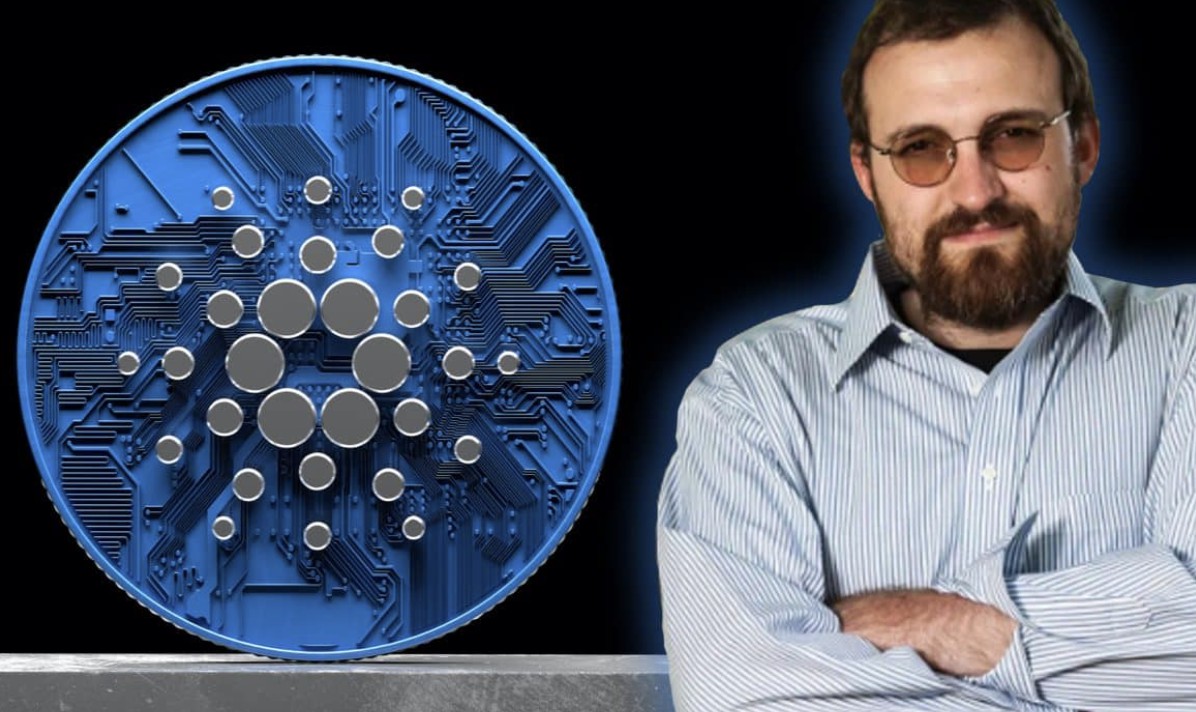
Cardano founder Charles Hoskinson has revealed plans for the network to integrate the world’s two largest stablecoins, USDC and USDT, in 2026. The announcement marks a significant milestone in Cardano’s long-term strategy to enhance liquidity, attract institutional users, and solidify its position in the increasingly competitive layer-1 blockchain landscape.
Hoskinson Outlines Stablecoin Push for Cardano
Speaking during a recent community discussion, Hoskinson has hinted that the network is set to integrate USDC and USDT next year. According to him, there is a path for the stablecoin integration with the Pentad structure.
Interestingly, the Pentad is a central strategy proposed by Hoskinson to amalgamate the Cardano Foundation, Emurgo, Input Output Global, the Midnight Foundation, and Intersect into a single entity. According to Hoskinson, the Pentad will be divided into two phases, with the first involving the unified five entities working together to deliver the core infrastructure missing in the ecosystem, which includes stablecoins.
If successful, the group will transition to Phase 2, which will focus on expanding Cardano’s DeFi footprint through a unified growth strategy. Meanwhile, there is no fixed date yet for the Pentad model, but the Cardano founder said the stablecoin integration is inevitable.
This is not surprising because stablecoins are no longer optional for layer-1 networks aiming for global relevance. In fact, Hoskinson added that the network could have done the integration in 2021 but missed its window and instead focused on proving that Cardano can successfully launch a billion-dollar product. Interestingly, the success of the NIGHT token launch has proved that point to the entire industry.
Why USDC and USDT Matter for Cardano’s Ecosystem
Meanwhile, USDC and USDT together account for over 80% of the global stablecoin market, with hundreds of billions of dollars in circulating supply and daily transaction volume. Their presence on Cardano could dramatically improve liquidity across decentralized exchanges, lending platforms, and payment applications built on the network.
It’s worth noting that while Cardano’s native stablecoin ecosystem has recorded some growth, it has struggled to achieve the same level of adoption as other major chains. Direct access to USDC and USDT could attract new developers, increase total value locked (TVL), and make Cardano more appealing to institutions seeking predictable, dollar-denominated settlement.
ADA Price Action Reflects Cautious Optimism
According to CoinMarketCap data, ADA has been consolidating after recent market volatility, hovering near key technical support levels around $0.35. While ADA currently trades around the critical support level, a break below can trigger a crash to $0.22. However, if bullish pressure intensifies, ADA could surge past the resistance wall around the $0.37-$0.40 range.
Meanwhile, the stablecoin integration narrative could strengthen ADA’s value proposition over time, especially if Cardano successfully delivers on its 2026 roadmap. However, it’s essential to note that price action will remain heavily influenced by broader crypto market trends, including Bitcoin’s performance and macroeconomic factors, in the near term.



 The CoinRemark Team
 Evans Kelvin