


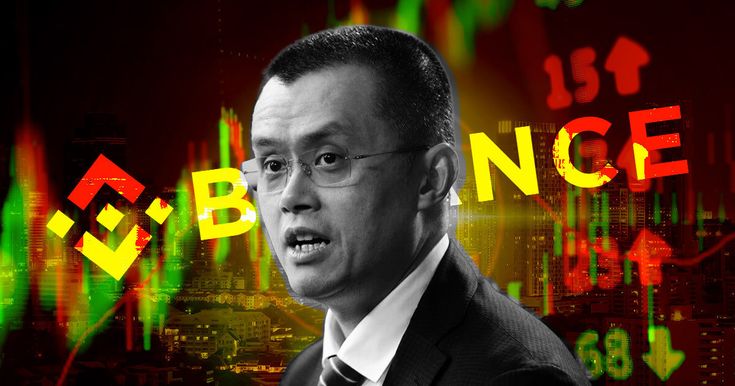
Optimism rippled through the crypto market after Binance founder Changpeng Zhao (CZ) reacted to reports that the US Securities and Exchange Commission (SEC) had removed crypto-related activities from its 2026 priority risk list.
The development, seen by many as a softening regulatory stance, prompted CZ to hint that the market could be heading toward a new “super cycle,” reigniting bullish sentiment across the industry.
CZ Reacts to SEC Move With Super Cycle Hint
CZ’s comments came shortly after crypto enthusiast BladeDeFi revealed that the SEC no longer considers crypto a top-tier risk in 2026. While the regulator did not frame the move as an endorsement of digital assets, market participants interpreted it as a sign of easing regulatory pressure after years of aggressive enforcement actions.
Meanwhile, it’s worth noting that this is not the first time the Binance boss has hinted at an incoming supercycle. CZ had made the same claim in December 2025, speculating that Bitcoin could be heading into a supercycle.
CZ revealed the information during the BitcoinMENA 2025 conference in Abu Dhabi. According to Zhao, Bitcoin may no longer follow its four-year cycle but is instead eyeing a super cycle driven by massive institutional adoption. Meanwhile, given CZ’s influence and track record of reading market cycles, his most recent supercycle claim quickly gained traction within the crypto community. Interestingly, market expert Michael van de Poppe reacted that Bitcoin could surge to $500,000.
Why Regulatory Relief Matters for a Super Cycle
A crypto supercycle is often defined as a prolonged period of growth driven by adoption, infrastructure development, and institutional participation, rather than short-lived speculation. Supporters of the super cycle thesis argue that regulatory headwinds have historically limited bull markets, preventing cryptocurrencies from reaching their full potential.
With crypto now removed from the SEC’s 2026 priority risk list, investors believe capital that previously stayed on the sidelines could begin flowing back into the sector. Asset managers, fintech firms, and enterprises may feel more comfortable expanding crypto exposure if regulatory uncertainty continues to decline.
In addition, clearer rules could accelerate innovation in areas such as tokenized assets, blockchain payments, and decentralized finance.
Notably, the US Senate is set to vote on the crypto clarity bill on January 15, 2026, which will establish a clear regulatory framework for the crypto market. If passed and finally signed into law, this bill will drastically reduce crypto market manipulation and close regulatory gaps.
Market Reaction
According to digital asset tracker CoinMarketCap, the crypto market has experienced a brief uptrend with Bitcoin reclaiming $90,000 and Ethereum trading above $3,100. Other top assets, including XRP, BNB, and Solana, saw modest gains of 0.1%, 1.4%, and 0.3%, respectively, in the past 24 hours.
However, according to SoSoValue data as of January 9, 2026, spot Bitcoin ETFs have recorded $249.99 million in outflows. Ethereum ETFs, too, weren’t spared from the institutional pullbacks, as ETH funds saw $93.82 million in outflows during the same time period.
Meanwhile, XRP ETFs, which had seen their first outflow of $40 million after several weeks of maintaining a no-outflow streak, saw an inflow of $4.93 million. However, the crypto market has yet to react to Zhao’s comments; therefore, market watchers and crypto enthusiasts are keeping a close eye on how events unfold.






 Evans Kelvin