


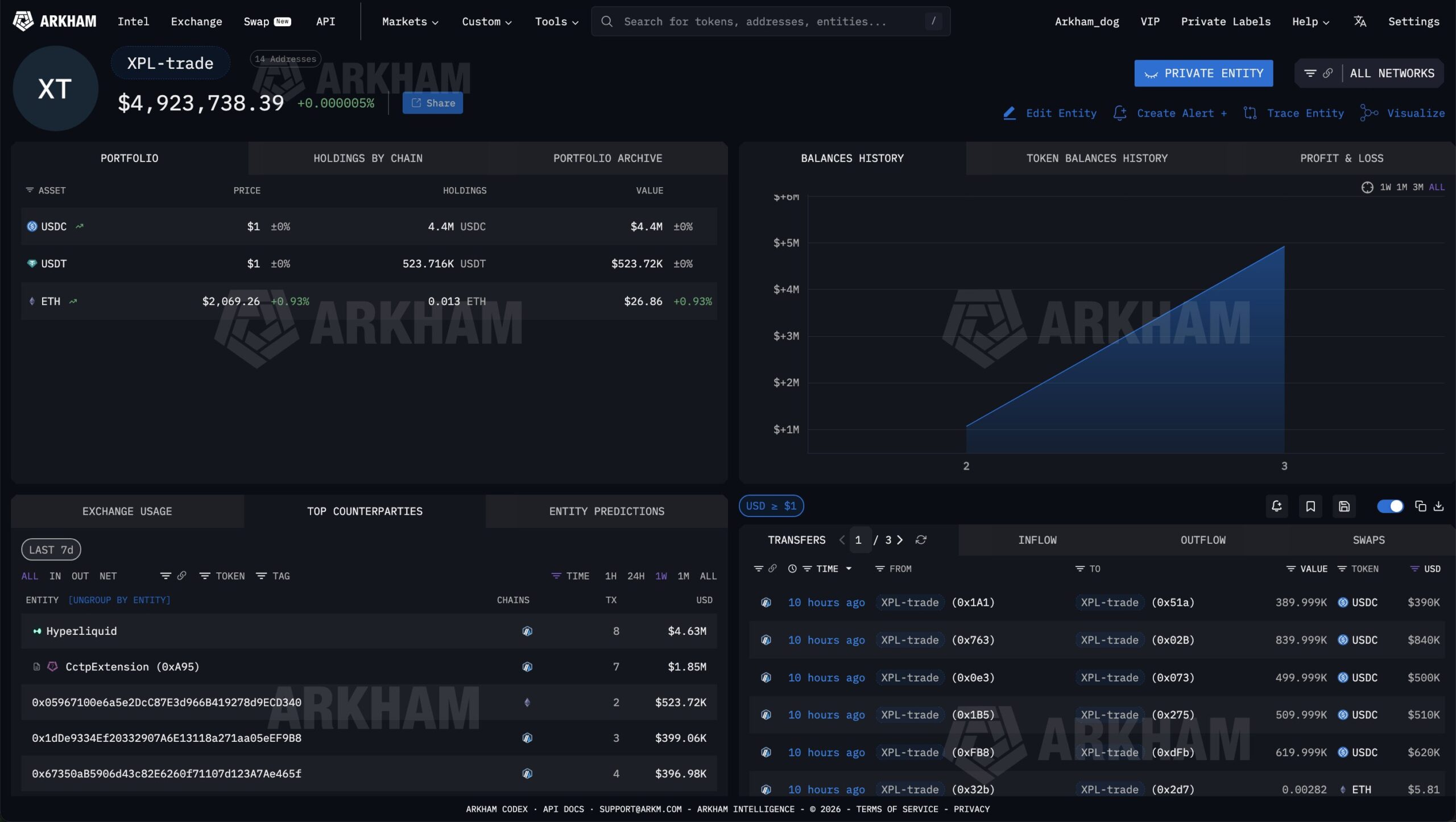
Hyperliquid is once again at the center of a market manipulation story, this time involving XPL. According to on-chain intelligence firm Arkham, seven coordinated accounts deposited a combined $1.85 million onto Hyperliquid on April 3, 2026.
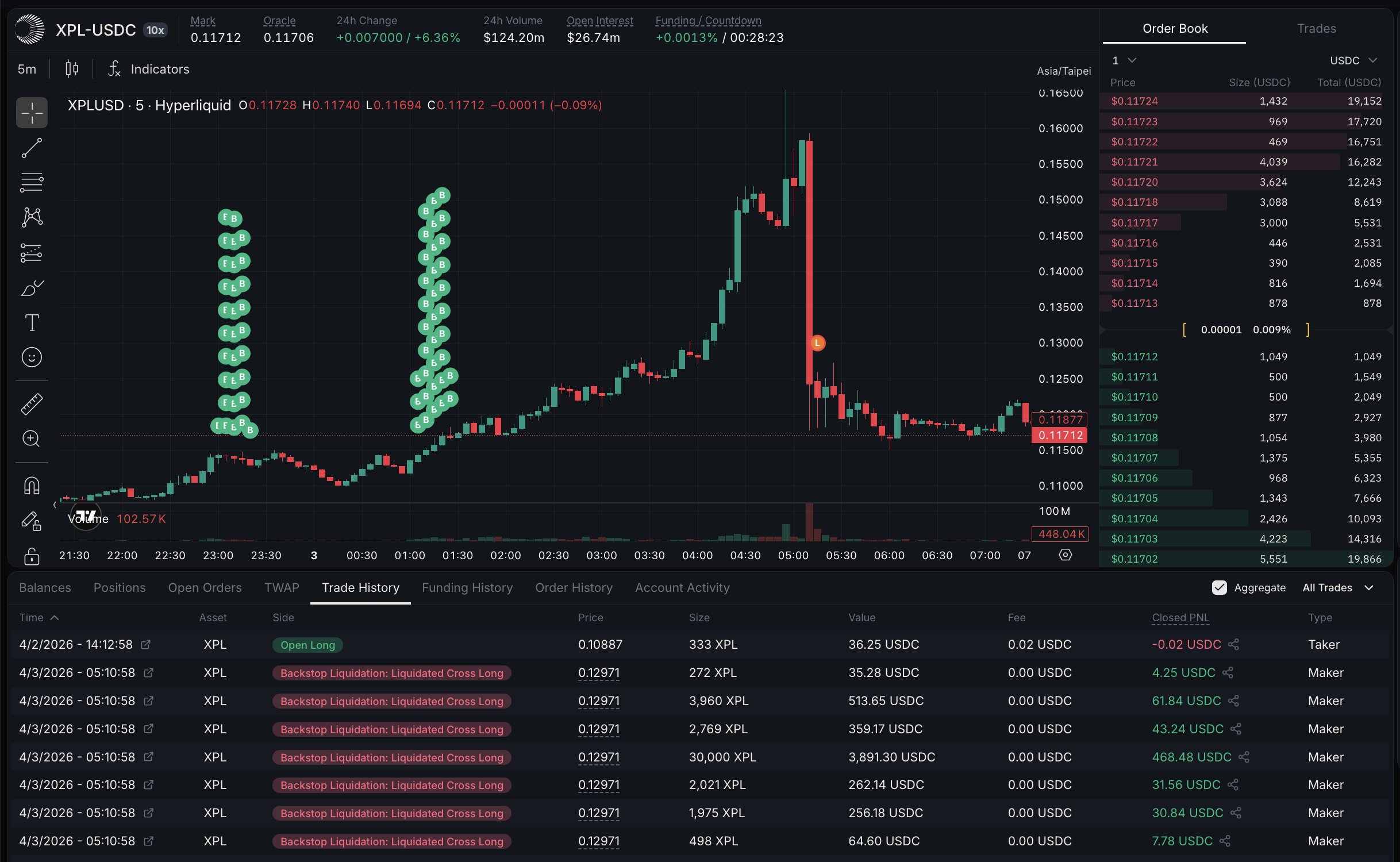
Afterward, the accounts opened leveraged long positions in XPL, pushing the token’s price up artificially. Then, at exactly the same moment, all seven wallets withdrew a total of $4.63 million from their collateral balances.
The timing was no accident, as withdrawing simultaneously meant the protocol couldn’t react before the damage was done. By doing this, the manipulators pocketed roughly $2.78 million in profit. Then they let their positions run into backstop liquidation, offloading the mess onto HLP, Hyperliquid’s native liquidity provider vault. That move cost HLP users around $600,000.
Furthermore, Arkham’s data suggests the same group ran what appears to be a mirror attempt on Aster, a separate decentralized platform, pulling in another $323,710 there.
Why This Feels Familiar
The Hyperliquid decentralized platform has dealt with variations of this problem before, and XPL has been at the center of it more than once. Back in August 2025, four whale addresses collectively profited around $47.5 million after XPL surged 200% to over $1.80 in a matter of minutes on Hyperliquid. The largest single wallet netted over $15 million as the main orchestrator.
That incident was far larger in scale, but the underlying logic was the same: exploit thin liquidity, move price with leverage, and cash out before the market can correct.
What made that attack particularly shocking was that the XPL futures market on other exchanges, such as Binance and Bybit, didn’t budge. Those platforms pull prices from multiple external sources and cap open interest on illiquid assets. Hyperliquid didn’t at the time. The manipulators chose Hyperliquid specifically because it had fewer guardrails.
Additionally, XPL wasn’t even the first token caught in this kind of scheme. Earlier in March 2025, a trader targeted Hyperliquid’s futures market for a memecoin called JELLY, executing shorts on the platform while buying the token on-chain, ultimately costing Hyperliquid’s market-maker vault $13.5 million.
What This Means for XPL Users
The most uncomfortable part of all this isn’t the $2.78 million profit the manipulators walked away with. Rather, it’s the $600,000 loss absorbed by everyday HLP users who had nothing to do with the trade.
Hyperliquid’s backstop liquidity vault exists to absorb losses when positions can’t be liquidated cleanly. That’s a reasonable design choice in theory. But when bad actors deliberately engineer positions to fall into backstop liquidation, those losses don’t fall on the manipulators. They fall on the people who simply deposited into the vault.





 The CoinRemark Team