

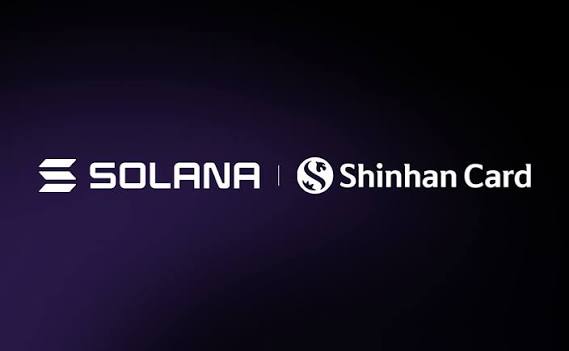
South Korea’s financial sector is accelerating its adoption of blockchain technology, with Shinhan Card emerging as one of the latest major players to formalize its strategy. The company has entered a strategic partnership with the Solana Foundation to develop a stablecoin-powered payment infrastructure on the Solana. The initiative reflects a growing institutional push to modernize payment rails using decentralized technologies while aligning with evolving regulatory frameworks.
Advancing Stablecoin Payments On Solana Through New PoC
Under the agreement, Shinhan Card will conduct an advanced proof of concept (PoC), building on a preliminary testing phase completed last year. While earlier efforts focused on foundational capabilities, the new phase is designed to evaluate real-world usability.
The company intends to test stablecoin payment flows between customers and merchants on the Solana testnet, simulating everyday retail transactions. This includes assessing how blockchain-based payments can integrate with existing financial systems while maintaining a seamless user experience.
A key objective of the PoC is to measure improvements in transaction speed, cost efficiency, and settlement finality compared to traditional card networks. By leveraging Solana’s high throughput and low fees, Shinhan Card aims to demonstrate that stablecoin payments can scale beyond niche crypto use cases into practical, high-frequency consumer environments.
Additionally, the pilot will validate the security and reliability of non-custodial wallets, which allow users to retain direct control over their funds. Ensuring these wallets meet institutional standards is critical for enabling broader adoption and minimizing operational risks as the company considers future deployment at scale.
XRP Now Live on the Solana Ecosystem Through LayerZero and Hex Trust Integration
Regulatory Tailwinds and Strategic Web3 Expansion
Meanwhile, the announcement comes amid growing regulatory clarity in South Korea and the wider Asia-Pacific region. Lawmakers are currently developing the Digital Asset Basic Act, a comprehensive regulatory framework for the digital asset sector widely expected to be finalized this year. The legislation is anticipated to provide clearer guidelines for stablecoins, exchanges, and blockchain-based financial services.
In anticipation of these regulatory developments, Shinhan Card has outlined plans to build a DeFi service environment powered by oracle technology. This infrastructure will enable secure data bridging between off-chain financial systems and blockchain networks, allowing real-world transaction data to be integrated into decentralized applications.
Such capabilities will allow the firm to rigorously test the stability of smart contract execution while also establishing a monitoring framework for next-generation financial services. The company is positioning itself to operate within a hybrid financial model that blends decentralized efficiencies with traditional compliance standards.
Shinhan Card also plans to strengthen its broader Web3 strategy in line with the evolving regulatory landscape. Notably, it is not alone in this shift. Other South Korean institutions are also entering the digital asset space through strategic collaborations. For example, KBank has partnered with Ripple to explore blockchain-based cross-border remittance solutions, highlighting a growing institutional embrace of crypto-powered finance.






 The CoinRemark Team
 Evans Kelvin