



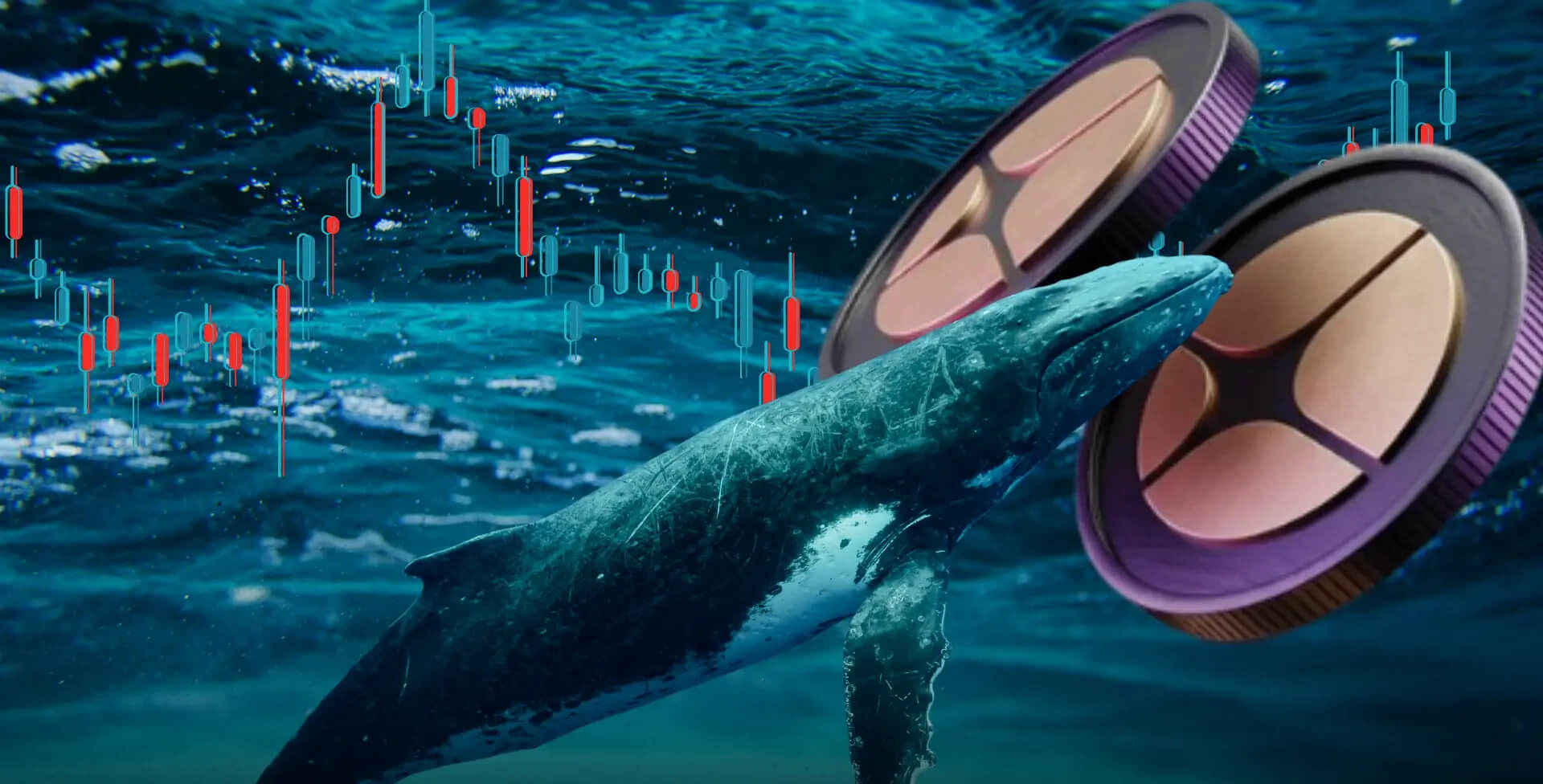
An Aster whale has deposited a large tranche of tokens into Binance, drawing attention across the market as on-chain data suggests the move was made at a significant loss.
The transaction comes amid heightened volatility for ASTER and renewed scrutiny of whale behavior during periods of price weakness.
Aster Whale Move Raises Market Eyebrows
Blockchain tracker Lookonchain has reported a transaction by an unknown Aster whale who deposited 13.44 million tokens, worth $13.04 million, into Binance at a loss. According to the on-chain sleuth, the whale had earlier withdrawn these tokens from Binance 6 days earlier.
Based on prevailing market prices at the time of the deposit, the transfer was made below the Aster whale’s estimated acquisition cost, thus realizing a $1.37 million loss.
Meanwhile, this is not the whale’s first rodeo, as Lookonchain added that the Aster whale has now recorded a total loss of over $35 million trading Aster, suggesting that their strategy may involve buying high and selling low.
Additionally, this is not the only whale movement associated with Aster, as a Matrixport-linked wallet recently withdrew 3 million Aster tokens from Binance, indicating increased interest from whales.
Loss-Taking or Strategic Repositioning?
Analysts note that whale transfers at a loss do not always signal panic selling. In some cases, large holders move funds to exchanges for strategic reasons such as portfolio rebalancing, hedging, or participating in derivatives and lending products.
Given broader market uncertainty, including declining altcoin momentum and reduced risk appetite among investors, some whales may be opting to reduce their exposure rather than wait for a potential rebound. Others argue the move could reflect capital rotation into higher-liquidity assets or stablecoins as traders position defensively.
What It Means for ASTER Going Forward
Whale activity remains a key metric for ASTER traders, particularly as the token navigates a challenging market environment. Large deposits into exchanges often increase volatility, but they can also present opportunities for accumulation if buyers absorb selling pressure.
If ASTER maintains support levels despite the whale transfer, it could signal growing market maturity and stronger demand at lower prices.
Meanwhile, it’s worth noting that the whale transfer occurs shortly after Aster DEX implemented some infrastructure upgrades with the launch of a private trading mode, known as shield mode.
This Shield mode enables users to trade BTC and ETH in stealth mode with zero slippage, gasless execution, and up to 1001x leverage. Further, Aster recently topped the 24-hour perpetual trading volume, outperforming HyperLiquid and Lighter.
Amid a broader market downturn, ASTER is down 7.39% over the past 24 hours and 13.19% over the past seven days. It is currently changing hands at $0.8087, boasting a market cap of $1.95 billion.



 Evans Kelvin
 The CoinRemark Team