



Bitcoin may have entered what one on-chain analyst describes as the “most frustrating” stage of the current market cycle, as conflicting indicators and weakening demand create a challenging environment for traders.
In a recent market update shared by the on-chain analytics firm CryptoQuant, analyst Julio Moreno outlined that Bitcoin is currently stuck in a phase of indecision, reduced momentum, and mixed signals across key metrics. Rather than signaling a clear bull continuation or bear reversal, the data points to stagnation, which is testing investors’ patience.
Bitcoin Demand Fails to Sustain Momentum
One of the core indicators highlighted in the analysis is apparent demand. While there were brief signs of recovery in buying pressure earlier in the cycle, those gains have not held. The lack of sustained demand suggests that new capital entering the market has slowed, limiting Bitcoin’s ability to break decisively higher.
This weakening demand dynamic typically leads to choppy price action, where rallies lose steam quickly, and dips fail to trigger strong accumulation.
Bull-Bear Indicators Show No Clear Winner
Another key metric, CryptoQuant’s Bull-Bear Cycle Indicator, reflects elevated volatility without a dominant trend. Historically, strong bull phases show clear upward momentum supported by rising demand and profitability metrics. Conversely, bear markets are marked by persistent weakness and distribution.
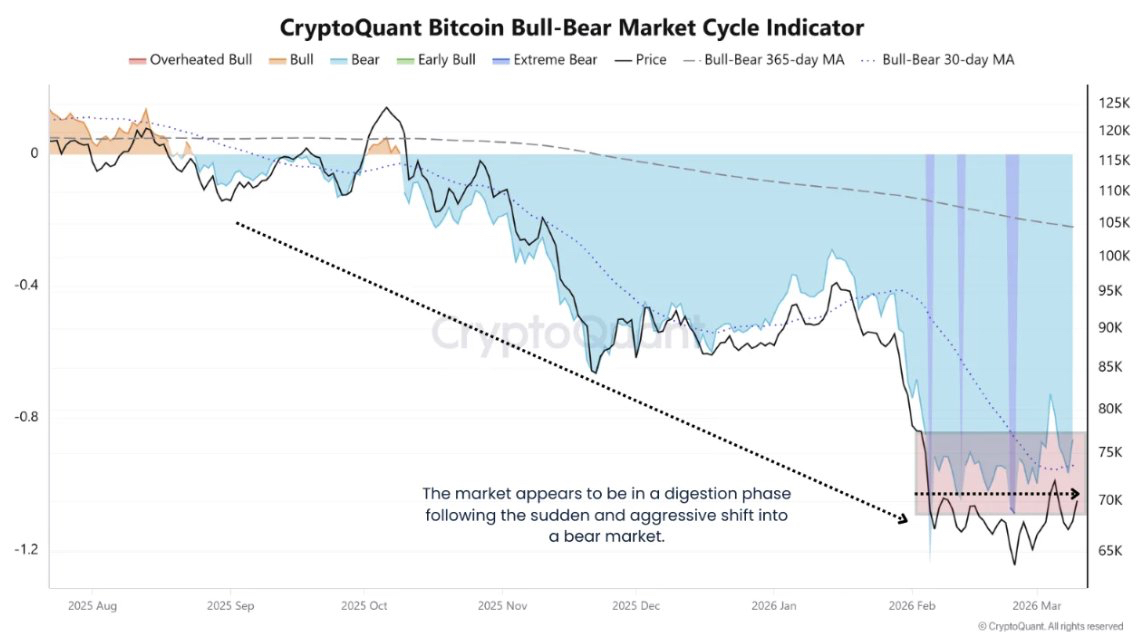
Currently, however, neither side appears fully in control. This limbo-like condition contributes to what Moreno describes as a frustrating environment, one where price swings occur but lack conviction.
Long-Term Bitcoin Holders Under Pressure
Adding to the uncertainty, the Long-Term Holder Spent Output Profit Ratio (LTH-SOPR) has dipped below 1. This suggests that some long-term holders are selling at a loss, a relatively rare event during strong bull phases. When long-term investors begin to realize losses, it can indicate broader hesitation or liquidity stress in the market.
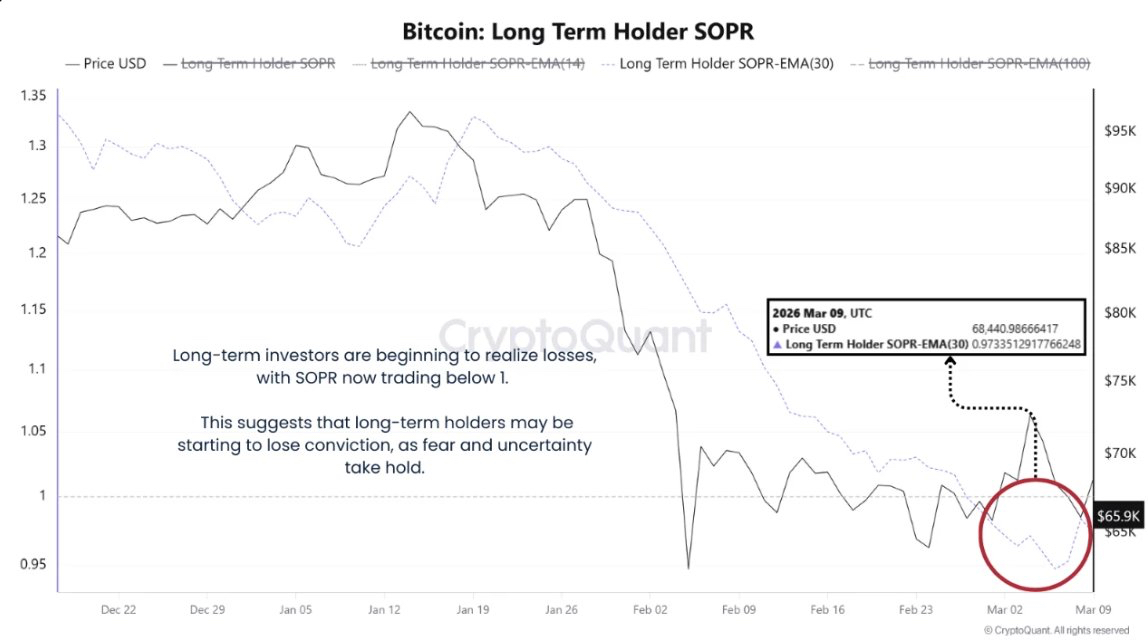
While this does not necessarily signal the start of a prolonged downturn, it underscores the fragile balance between supply and demand at current price levels.
A Transition Phase, Not a Collapse
Despite the cautious tone, the analysis does not point to an imminent crash. Instead, it frames Bitcoin’s current position as a transitional phase, a cooling period in which the market digests prior gains and speculative excess reduces.
Historically, such phases can precede either renewed expansion or deeper corrections, depending on whether fresh demand enters the market. For now, Bitcoin remains range-bound, trading between $72,000 and $69,000 as traders await a decisive catalyst.
If the cycle progresses as it has in previous years, the current “frustrating phase” may ultimately serve as consolidation before a clearer directional move emerges. Until then, volatility without trend dominance appears to define Bitcoin’s present market structure.







 Evans Kelvin
 Temitope Olajide