

A long-dormant Ethereum wallet has suddenly come back to life after nearly a decade, moving a massive ETH balance to a centralized exchange and drawing fresh attention from on-chain watchers and market participants.
Whale Sends ETH to Gemini After Nine Years of Inactivity
According to on-chain data highlighted in a post by Emmett Gallic on X, an Ethereum address that had remained inactive for roughly nine years transferred its entire ETH balance to the Gemini exchange. The transaction marked the wallet’s first major movement since 2017 and involved tens of thousands of ETH, valued at well over $100 million at current prices.
On-chain records show that the wallet accumulated 450,000 ETH during Ethereum’s early growth phase, when prices were still around $64 per coin. After selling some and becoming inactive in mid-2017, the address remained untouched through multiple market cycles, including Ethereum’s all-time highs and subsequent downturns.
The transfer was executed in a single-day sequence of transactions yesterday, totaling 135,000 ETH, and sent directly to a Gemini-linked address, raising questions about potential selling activity. Large exchange inflows are closely monitored by traders, as they can signal preparation for liquidation or portfolio reallocation.
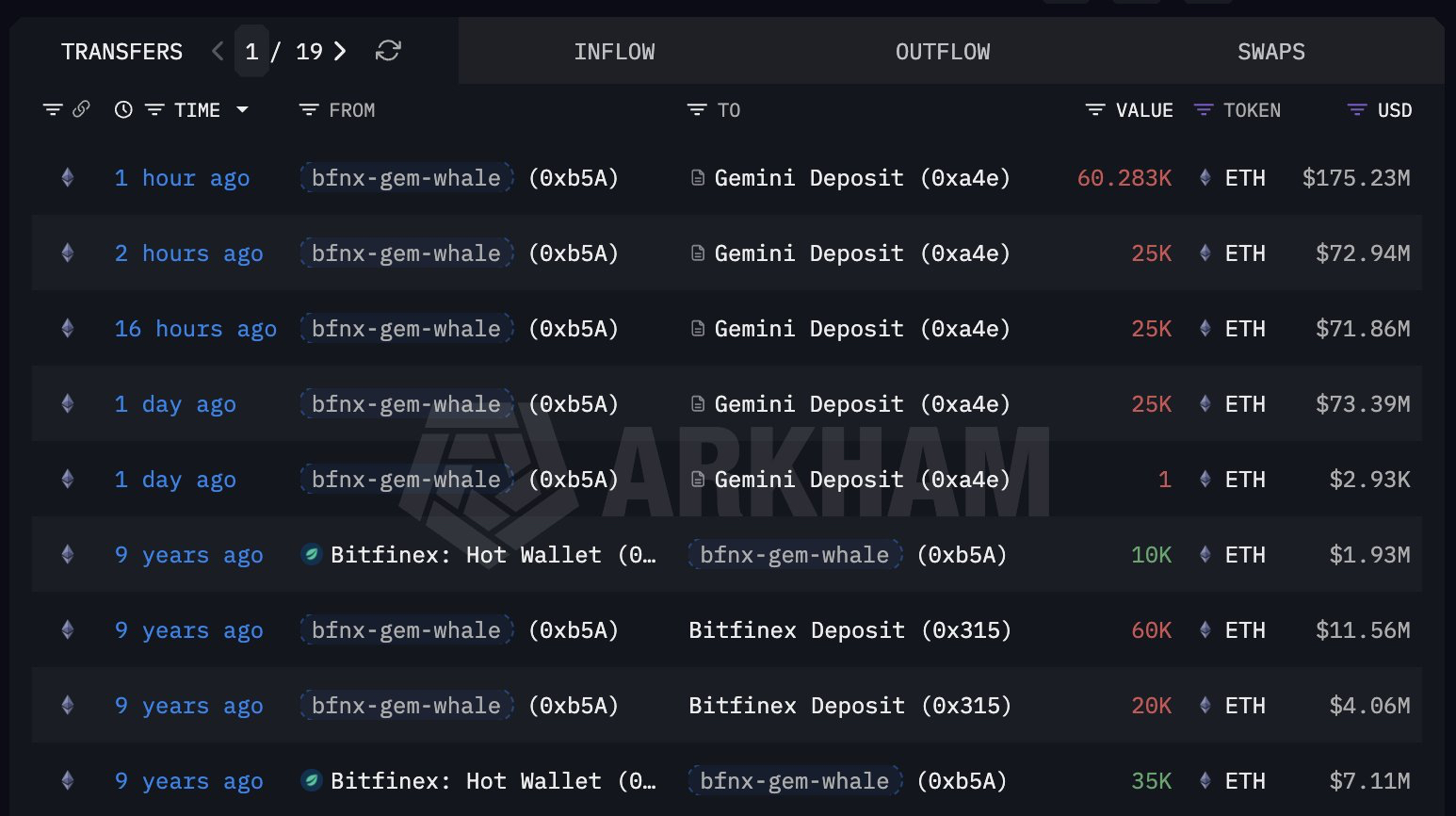
The recent movement represents a dramatic reactivation, with the whale now sitting on $402 million in profits, a multi-thousand percent return relative to the original acquisition price.
Market Context Around the Ethereum Move
The whale activity comes at a time when Ethereum has been trading within a relatively tight range, with price action showing sensitivity to large on-chain movements. In such environments, major exchange inflows can have an outsized psychological impact, even if they do not immediately translate into selling.
The sheer size of the transfers has attracted heightened attention because they can indicate imminent selling pressure. While not all exchange deposits result in immediate liquidation, traders typically view them as a shift from long-term cold storage toward liquidity.
In this case, the fact that the entire wallet balance was moved at once has intensified market scrutiny. Analysts are watching closely to see whether the ETH remains on the exchange or is gradually sold into the market. Market participants will now be monitoring Gemini’s ETH flows to determine whether the transferred funds are distributed, sold, or remain idle on the exchange. Any follow-up transactions could offer clearer insight into whether the whale is exiting its position or simply repositioning after years of inactivity.
In the meantime, ETH could experience short-term volatility as traders reassess supply risks and adjust their positions based on perceived intent.






 Evans Kelvin
 The CoinRemark Team