
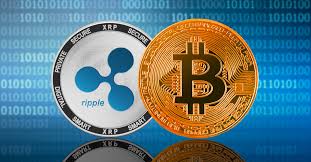


The conversation around XRP’s role in global finance continues to evolve. On April 2, Ripple CTO Emeritus David Schwartz added his voice to it.
Writing on X, he was careful not to frame it as a rivalry. Instead, he structured his argument on what XRP brings to the table that stablecoins don’t.
He acknowledged upfront that stablecoins serve a genuine purpose, particularly when price stability is the priority. Also, when a regulated structure with a trusted counterparty is called for. What he argued, though, is that XRP carries three distinct advantages that stablecoins simply aren’t designed to offer.
Built for a Multi-Currency World
Stablecoins are pegged to a single currency, and that’s by design. However, that design has limits in cross-border settings. In multi-jurisdiction payment flows, the stablecoin required for a specific fiat corridor may not exist or may lack the right qualities.
A business settling payments across multiple countries can’t rely on a single stablecoin to bridge them cleanly. Meanwhile, XRP works differently. It operates as a neutral bridge asset, not tied to any single fiat system, thereby simplifying cross-currency transfers without requiring multiple tokens.
No XRP Counterparty or Court Order Restrictions
The second edge is about control. Stablecoins have issuers, and those issuers operate within legal systems. Hence, a stablecoin can be frozen or reversed, not necessarily because the user did anything wrong, but because a court order or jurisdictional dispute triggered it.
Schwartz pushed this point with a sharp hypothetical: what if a user’s funds got caught up in a legal dispute based on secret evidence and a false accusation? Would the system move fast enough to protect them?
On the other hand, XRP transactions don’t carry the same counterparty structure, making XRP more resistant to censorship in cross-border transfers. For use cases where transacting without depending on an issuer’s legal standing matters, that difference is significant.
XRP Price Increases, Stablecoins Don’t
The third point is straightforward. Stablecoins hold their value. However, this also means they can’t grow. Schwartz argued that when stability isn’t a requirement, XRP offers upside potential that stablecoins aren’t designed to provide. He put it simply: if he had to lock money in escrow for a year, he’d choose XRP or BTC over dollars. This is because the dollar isn’t going up. For long-term custody or escrow arrangements, XRP becomes the stronger option.
For Schwartz, XRP and stablecoins aren’t competing for the same lane. They solve different problems. So, in a payments world that keeps getting more global and more complex, XRP’s neutrality, censorship resistance, and growth potential are exactly what keep it in the conversation.





 Temitope Olajide
 Evans Kelvin

 Josiah Oluwadare