



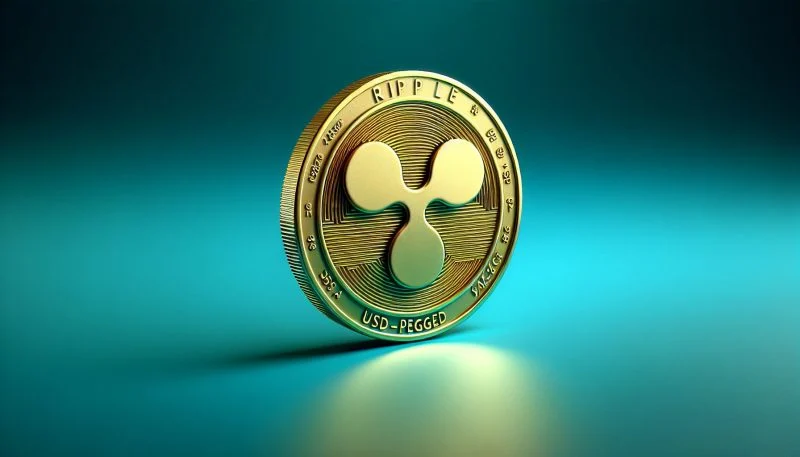
The move signals Ripple’s intent to position RLUSD as a foundational settlement asset across both institutional finance and the rapidly expanding on-chain economy.
While RLUSD was initially issued on the XRP Ledger (XRPL) and Ethereum in December 2024, Ripple is now extending its reach to Layer-2 ecosystems, where lower fees, higher throughput, and growing DeFi activity are driving adoption.
RLUSD is expanding to Layer 2s using @wormhole’s NTT standard for native, secure transfers and will become the first U.S.-based, trust-regulated stablecoin on @Optimism, @Base, @Inkonchain and @Unichain: https://t.co/ju9KyoOIBa
This will enhance utility for XRP and RLUSD by…
— Ripple (@Ripple) December 15, 2025
RLUSD Expands to Its First Layer-2 Networks
Ripple announced that RLUSD will begin testing on its first L2 networks, such as Optimism, Base, Ink, and Unichain, ahead of its official public debut next year, pending regulatory approval. The expansion is being carried out in partnership with Wormhole, a leading cross-chain interoperability protocol, using its Native Token Transfers (NTT) standard.
By leveraging Wormhole’s NTT framework, Ripple can maintain native issuance and control of RLUSD while enabling secure and efficient liquidity movement across multiple ecosystems. Optimism acts as a key entry point, connecting RLUSD to a broader family of L2 networks, including Base, Ink, and Unichain.
This design allows RLUSD to move seamlessly across chains without relying on traditional wrapped assets, reducing fragmentation and improving capital efficiency.
A Purpose-Built Multichain Strategy
Ripple’s decision to bring RLUSD to L2 networks underscores its broader multichain vision. Rather than treating L2s as secondary environments, Ripple is positioning them as core venues for stablecoin usage, particularly as real-world financial applications increasingly migrate on-chain.
According to Jack McDonald, Ripple’s Senior Vice President of Stablecoin, RLUSD is designed to serve as the trusted bridge between traditional finance and decentralized ecosystems. He emphasized that stablecoins are often the entry point to DeFi and institutional participation, and that RLUSD aims to set a new benchmark by combining regulatory compliance with on-chain efficiency.
With this expansion, Ripple is not merely increasing RLUSD’s availability; it is laying the groundwork for scalable, interoperable liquidity across the most active Ethereum-based L2 environments.
The development comes days after Ripple secured approval from the OCC to charter a National Trust Bank, making RLUSD the first stablecoin to operate under federal and state oversight and also the first regulated stablecoin to launch on these L2 networks.



 Temitope Olajide
 The CoinRemark Team