



In today’s crypto news, banking giant Standard Chartered has issued a very bullish forecast for decentralized finance. According to a new research note from Geoff Kendrick, the bank’s head of digital assets research, assets actively used in DeFi protocols could grow 37-fold to approximately $2.7 trillion by the end of 2030.
The projection came on the heels of rapid growth in tokenized assets and their integration with DeFi applications. Kendrick believes the trend could create the next major wealth-generation opportunity in the digital asset sector.
Standard Chartered Sees Massive Growth Ahead for DeFi
The bank’s forecast centers on the very real potential for more tokenized assets to eventually flow into DeFi. Today, only a small percentage of tokenized assets are actively being used inside decentralized lending, borrowing, trading, and liquidity protocols.
According to Kendrick, only 3% of stablecoins and roughly 10% of tokenized real-world assets currently participate in DeFi. Overall, only about 3.5% of tokenized assets are actively used within DeFi protocols today.
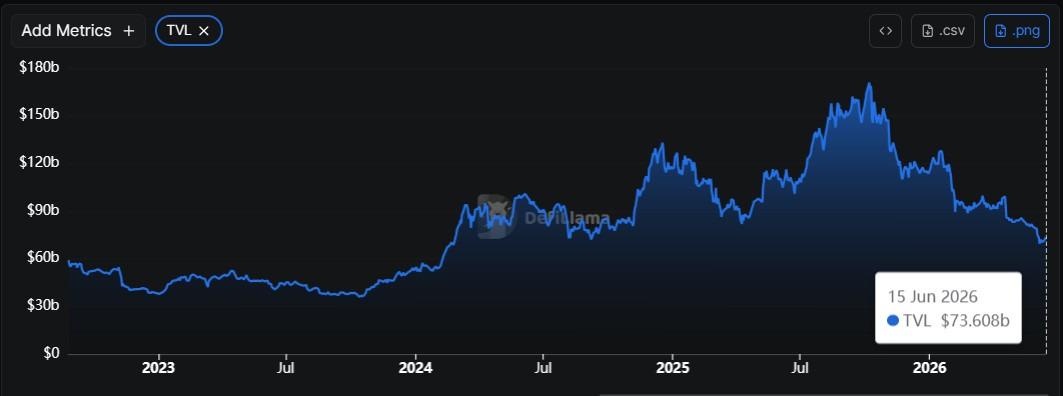
However, Standard Chartered expects that figure to rise dramatically over the next five years. The bank projects that approximately 30% of tokenized assets will eventually be deployed into DeFi by 2030. If that happens, total assets locked in DeFi could surge to $2.7 trillion. That would mark a 37 times increase from its current level at $73.6 billion.
The forecast also builds on Standard Chartered’s earlier prediction that non-stablecoin tokenized real-world assets could reach $2 trillion by 2028. At the time, the bank identified tokenized money-market funds and US equities as the areas with the largest growth potential.
Tokenization Could Transform DeFi
Institutional supporters propose that tokenization can improve efficiency, reduce settlement times, and expand access to financial markets. Standard Chartered believes the biggest impact may come when those tokenized assets begin interacting with DeFi protocols at scale.
Not everyone believes the transition will be seamless. Some industry participants have warned that tokenization alone does not guarantee liquidity. For instance, Ondo Finance executive Oya Celiktemur recently pointed out during a panel at the Paris Blockchain Week that tokenizing an illiquid asset does not automatically make it liquid.
Nevertheless, consensus seems to favor the sector, at least for the moment. McKinsey & Company projects that the tokenized market capitalization will grow to $2 trillion by December 2030. Grayscale has also recently highlighted tokenization as a giant field of opportunity, ready for cultivation.
Uniswap Could Be a Major Beneficiary
Kendrick highlighted Uniswap as one of the protocols best positioned to benefit from the trend. He pointed to the decentralized exchange’s scale, strong brand recognition, and resilience, having operated successfully through multiple crypto market cycles.
Those characteristics could make Uniswap particularly attractive to traditional financial institutions looking for reliable venues to trade tokenized assets. Kendrick added that if Uniswap succeeds in establishing enough partnerships with traditional finance firms, its valuation could begin to close the gap with major centralized platforms such as Coinbase.




 The CoinRemark Team
 Evans Kelvin