
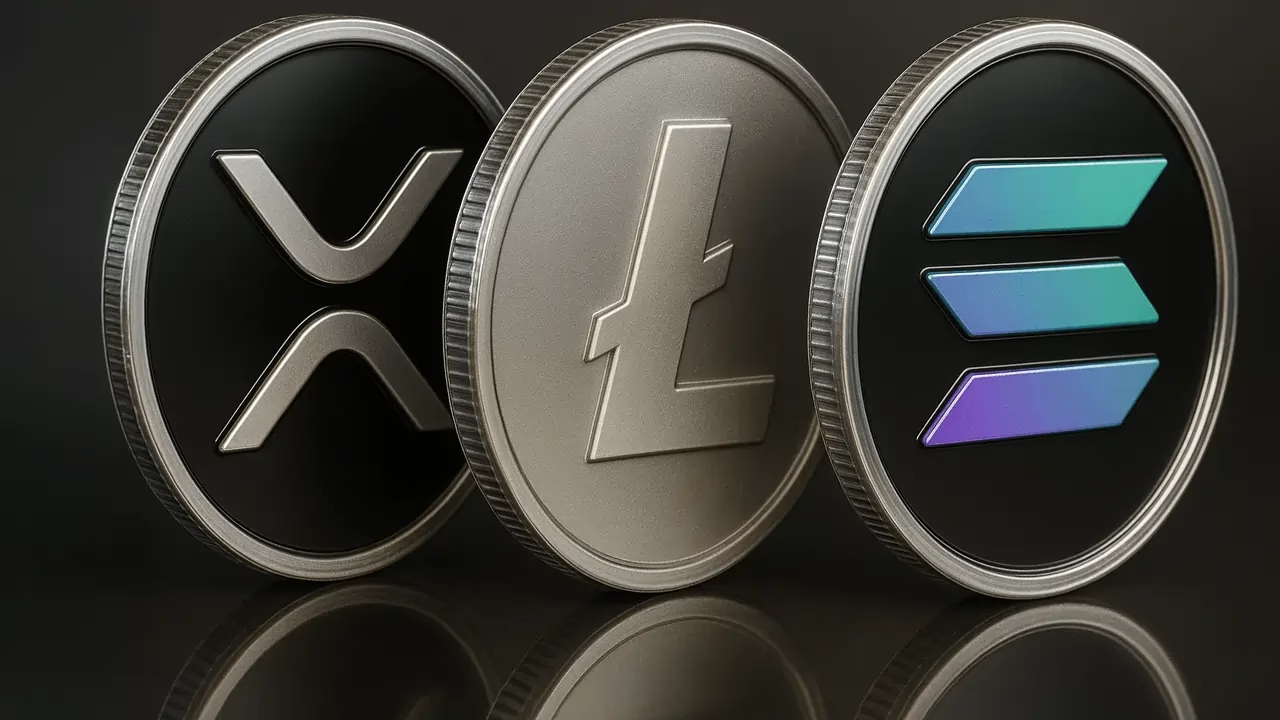
A major regulatory shift is emerging in the US Senate, signaling support for granting XRP, Solana (SOL), and Litecoin the same legal treatment afforded to Bitcoin and Ethereum. If finalized, the move could reshape the regulatory structure for digital assets and provide long-awaited clarity for several top altcoins.
Senate Banking Committee Draft Classifies Select Tokens as Non-Ancillary Assets
According to a recent report by journalist Eleanor Terrett, the U.S. Senate Banking Committee has released its legislative draft on the Clarity Act bill. A portion of the draft includes a provision to classify certain cryptocurrencies as “non-ancillary assets.”
Under this framework, any token serving as the primary asset in an exchange-traded product (ETP) listed on a national securities exchange and registered under Section 6 of the Securities Exchange Act would automatically receive non-ancillary status.
This designation exempts qualifying tokens from the disclosure requirements imposed on other digital assets, placing them closer to Bitcoin and Ethereum in terms of regulatory treatment. The classification relies on verifiable market maturity, evidenced by inclusion in regulated ETPs.
As of January 1, 2026, the crypto ETP landscape includes Litecoin, Dogecoin, XRP, Solana, Hedera, and Chainlink, positioning all six tokens to benefit from the proposed regulatory shift. For XRP, SOL, and LTC, this would effectively resolve longstanding uncertainty surrounding their legal status, offering a more predictable operating environment for exchanges, institutions, and ETF issuers.
Analysts Say Clarity Act Could Widen Institutional Access and Strengthen Market Structure
Industry experts have already welcomed the development, and one such executive is Bitget’s Chief Marketing Officer, Jamie Elkaleh. Commenting on the recent developments, Elkaleh remarked that ETF-linked non-ancillary status could expand institutional access frameworks from BTC and ETH to other tokens, signaling a significant broadening of the asset classes in which institutions can legally interact.
Jordan Jefferson, CEO of DogeOS, added that statutory classification clarity expands the set of institutions that can legally engage with specific assets, highlighting how regulatory ambiguity has historically limited institutional participation.
Analysts argue that the framework could unlock new financial products, simplify compliance structures, and improve liquidity across the altcoin market, shifting the U.S. regulatory landscape from reactive enforcement to structured rulemaking.
Market Reaction Builds as Senate Schedules Markup Hearing
XRP, which was CNBC recently highlighted as the darling of the crypto market, has been a force to reckon with in the crypto ETF sector since last year. XRP, alongside Solana, have continued to attract inflows even as investors shift away from BTC and ETH funds.
Litecoin ETF, on the other hand, has continued to struggle for flows due to weak investor activity. Thus, this new provision could alter the status quo and attract new investments from institutional investors who have been hesitant due to regulatory hurdles.
Meanwhile, the Senate Banking Committee has scheduled markup hearings for Thursday to debate and potentially revise the bill, setting the stage for what could become one of the most consequential regulatory milestones for altcoins in U.S. history. In contrast, the Senate Agriculture Committee has deferred its own markup session until late January.





 Evans Kelvin
 The CoinRemark Team