




Bitcoin and the broader cryptocurrency market experienced a sudden sell-off on Friday, catching traders off guard and wiping millions from the market within hours. Bitcoin briefly plunged toward the $65,000 level after trading near weekly highs just two days earlier. Altcoins followed with even steeper declines; Ethereum dipped from around $2,200 to $1,980.
Failed Iran Deal Sparks Market Panic and Bitcoin Dump
According to analysis shared by DeFiTracer, the latest crypto sell-off followed the failure of a de-escalation agreement in the Middle East. Iran reportedly rejected the terms of peace offered in recent negotiations with the U.S. President Donald Trump had earlier ordered that all military action on Iran be suspended while talks were resumed to restore peace in the region. That development sponsored a surge in the crypto markets, with Bitcoin and others posting modest returns.
However, the situation intensified further after reports of a 48-hour U.S. ultimatum and potential threats involving the Strait of Hormuz, one of the world’s most critical oil shipping routes. These developments triggered widespread uncertainty across global markets.
When geopolitical risks rise, investors typically shift away from volatile assets such as cryptocurrencies and equities. Instead, capital often rotates into traditional safe havens such as gold, bonds, and cash. The risk-off shift appeared to unfold rapidly across financial markets.
Bitcoin, which was trading near $72,000 earlier in the week, fell sharply below $65,000, but is back above $66,000.
Liquidations Accelerate the Downturn
The sell-off quickly triggered a wave of liquidations across the crypto market. Analysts estimate that more than $450 million in leveraged positions were wiped out within 24 hours as prices moved against bullish traders.
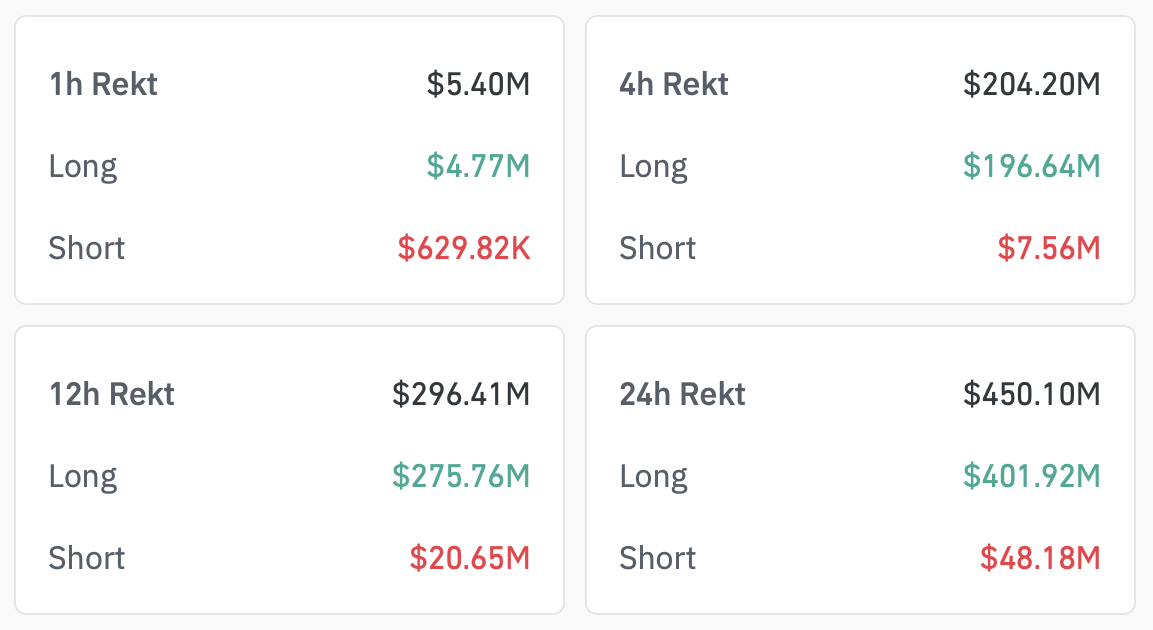
This type of rapid deleveraging typically amplifies volatility, as forced liquidations push prices lower and trigger additional selling pressure. Institutional positioning may have also contributed to the decline. According to the reports, some large investors reportedly sold Bitcoin to meet margin requirements in other markets, particularly as volatility spread across equities and global risk assets.
Gold Surges as Capital Rotates Out of Bitcoin
While crypto markets fell, gold moved sharply higher, reflecting the shift toward safety. Analysts noted strong gold performance during the same period, supported by increased central bank purchases, particularly in Asia and the Middle East.
This rotation highlights tightening liquidity conditions across global markets. During periods of geopolitical uncertainty, investors often prioritize capital preservation, reducing exposure to risk assets like cryptocurrencies.
The dynamic also helps explain why Bitcoin did not immediately behave as a hedge during the initial phase of the crisis. Instead, capital flowed toward traditional safe havens, while risk assets absorbed the initial shock.
The ongoing sell-off underscores how macro and geopolitical developments continue to shape crypto market movements. Traders will remain sensitive to global risk conditions. If tensions continue to escalate, further volatility could follow. However, stabilization in geopolitical developments could help risk assets recover, especially if liquidity returns to the market.







 The CoinRemark Team