

In today’s crypto update, China is reportedly exploring the creation of an AI token futures market amid intensifying competition with the United States. The move highlights Beijing’s growing urgency to strengthen its position in the global artificial intelligence race. It also signals China’s increasing willingness to merge AI innovation with digital finance infrastructure.
Shanghai Futures Exchange Begins Early Planning
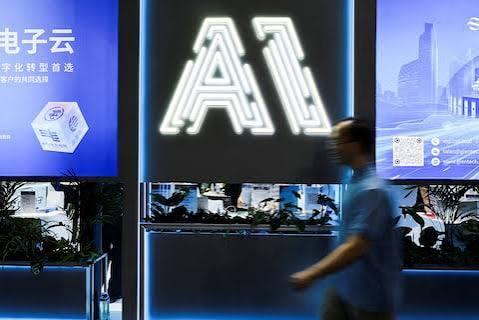
As reported by Reuters, the Shanghai Futures Exchange is in the early stages of designing futures contracts for AI tokens, the smallest units of information processed by AI models. The exchange is a major hub for commodity and metals futures trading in China and is reportedly working in line with the China Securities Regulatory Commission on the upcoming product.
Reuters said the proposed futures products would be tied to AI tokens used for pricing AI services and computational resources. The initiative remains in its preliminary stages and is largely being driven by China’s intensifying AI rivalry with the United States. However, there is currently no official timeline for the launch of the products. Authorities have also not indicated when the exchange could seek formal regulatory approval for the proposed futures contracts.
China Expands Push Into AI Compute Markets
Meanwhile, China’s latest AI move comes as CME Group and Intercontinental Exchange in the United States prepare to launch GPU compute futures tied to the cost of renting computing power for AI systems.
The United States currently leads much of the global AI industry through companies such as OpenAI, NVIDIA, and Microsoft. However, China has recently increased investments in AI chips, data infrastructure, and local large language models to reduce dependence on foreign technology.
China continues to view AI as a strategic sector and a major engine for economic growth. Authorities are accelerating the development of a spot market for computing power backed by data center operators, AI developers, and companies that heavily rely on compute infrastructure.
Interestingly, commodity brokerage Baocheng Futures recently stated in a research note that China could debut compute futures products within the next three to five years. Official data showed China’s daily AI token usage surged 1,000-fold since the start of 2024 to more than 140 trillion by the end of March. However, growing demand has also exposed supply pressures. In recent months, computing power shortages have reportedly forced several Chinese AI platforms to ration user access.
Regulatory Questions Remain
Despite this ambition, significant regulatory concerns remain unresolved. China maintains strict controls over cryptocurrency trading and speculative digital asset activity. As a result, authorities may attempt to structure the proposed market within a tightly supervised framework.
Market observers believe Beijing could limit participation to licensed institutions or state-approved platforms. Others argue that the initiative may focus more on enterprise blockchain systems than on open crypto markets.
The broader push also reflects how seriously China views the global AI race. Yilei Shao, Dean of the Shanghai AI-Finance School at East China Normal University, recently stated that “The United States and China are the only two nations capable of mass-producing artificial intelligence.” She further added that the phrase “Whoever masters AI, rules the world” is “hardly an exaggeration.”
With both nations aggressively competing for AI dominance, financial innovation is increasingly becoming part of the broader geopolitical contest between Beijing and Washington.



 The CoinRemark Team
 Evans Kelvin