

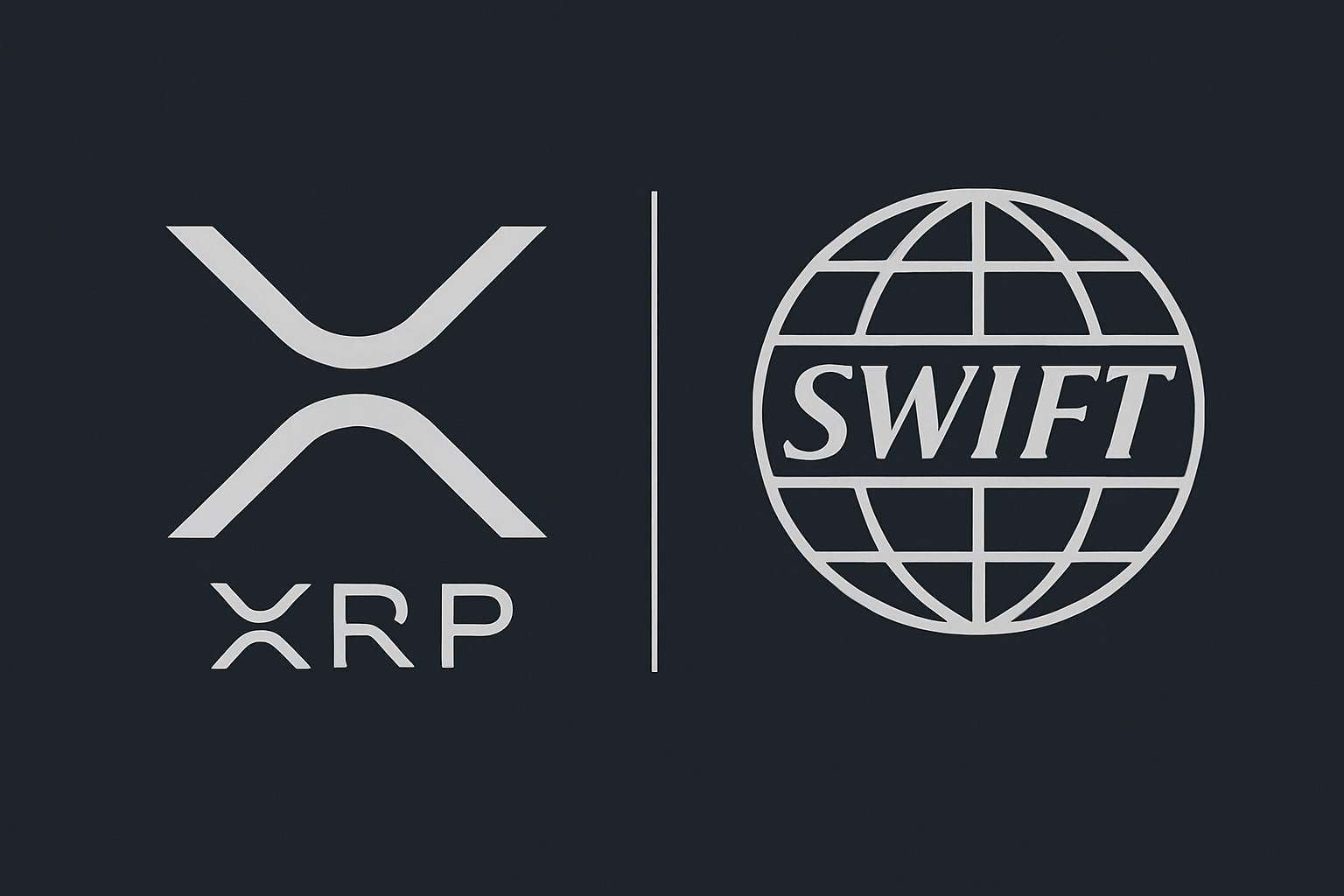
In today’s crypto update, SWIFT has taken another major step toward integrating blockchain into global finance. The financial messaging giant has officially begun testing its Shared Ledger platform with leading banks across six continents, while several participating institutions already have established ties to Ripple.
Consequently, the development has sparked fresh speculation that XRP could eventually serve as a liquidity bridge as tokenized cross-border payments become more common.
SWIFT Launches Shared Ledger Testing With Global Banks
Global financial messaging platform SWIFT announced in a recent report that its blockchain-based shared ledger concept is now live for testing. Interestingly, the organization revealed that 17 banks across six continents are preparing to use the ledger for 24/7 tokenized cross-border payments.
The participating institutions include HSBC, BNP Paribas, BNY, Citi, Wells Fargo, OCBC, and several others. Notably, many banks featured in the initiative, including HSBC, Citi, Standard Chartered, Santander, Deutsche Bank, JPMorgan, and others, already have existing relationships or previous collaborations with Ripple. That relationship has quickly attracted the attention of the XRP community.
Meanwhile, this milestone builds on SWIFT’s October 2025 announcement, when it first unveiled the Shared Ledger concept. At the time, the company said the platform would enable banks to settle transactions involving stablecoins and tokenized assets across multiple blockchains while continuing to use existing payment rails.
According to SWIFT, the system will enable banks to transfer customer funds overnight and on weekends, with final settlement occurring later through existing payment infrastructure.
As a result, financial institutions can improve customer experience and increase global liquidity efficiency without compromising risk management, credit controls, or regulatory compliance. Commenting on the development, SWIFT Chief Business Officer Thierry Chilosi said the Shared Ledger extends “the trust and stability of established finance into the frontiers of digital money.”
XRP’s Ripple Banking Ties Fuel SWIFT Shared Ledger Speculation
Meanwhile, XRP, the digital asset closely affiliated with Ripple, remains at the center of growing speculation surrounding SWIFT’s Shared Ledger initiative. Interestingly, 10 of the 17 banks testing SWIFT’s Shared Ledger are affiliated with Ripple’s banking network. They include Standard chartered, UBS, HSBC, Wells Fargo, DBS, Citi, BNP Paribas, and Bank of New York, among others.
That overlap has strengthened bullish expectations. It has also fueled speculation that XRP could play a larger role as banks adopt tokenized cross-border payments. The bullish narrative extends even further. More than 30 of the over 50 banks in SWIFT’s broader payments framework already have ties to Ripple’s ecosystem. In addition, around 40% of those Ripple-connected banks reportedly use Ripple’s On-Demand Liquidity (ODL) solution, which leverages XRP as a bridge asset for near-instant settlement.
Meanwhile, Versan Aljarrah, founder of BlackSwanCapitalist.io, argued in a recent X post that XRP is not replacing SWIFT. Instead, he said, XRP is becoming a liquidity bridge within SWIFT’s evolving infrastructure. He pointed to the growing overlap between Ripple’s banking partners and institutions participating in SWIFT’s blockchain initiatives as evidence supporting his view.
Interestingly, crypto researcher Anderson also rejected similar claims in October 2025. At the time, he described suggestions that SWIFT would “kill XRP” as “hilarious.” He argued that XRP can coexist with SWIFT because its use cases extend far beyond acting as a payment alternative for banks.
Moreover, the XRP Ledger ecosystem has expanded considerably over the past year. It now supports decentralized exchanges, automated market makers (AMMs), DeFi staking services, tokenization, and other blockchain-based applications. As a result, XRP’s utility now reaches far beyond institutional payments, giving the digital asset multiple long-term growth drivers.






 The CoinRemark Team
 Evans Kelvin