



In today’s crypto news, the market witnessed another major wave of liquidations as more than $606 million in long crypto positions were wiped out within 24 hours. The selloff marked the largest single-day liquidation event since February and came as Bitcoin dropped toward the $77,000 region yesterday. The broader correction triggered heavy losses across leveraged traders as downside volatility accelerated rapidly across major exchanges.
At the same time, new on-chain data revealed that Bitcoin retail participation continues collapsing. According to CryptoQuant data, retail BTC inflows to Binance have now fallen to the lowest levels ever recorded.
Crypto Liquidations Surge Across Major Exchanges
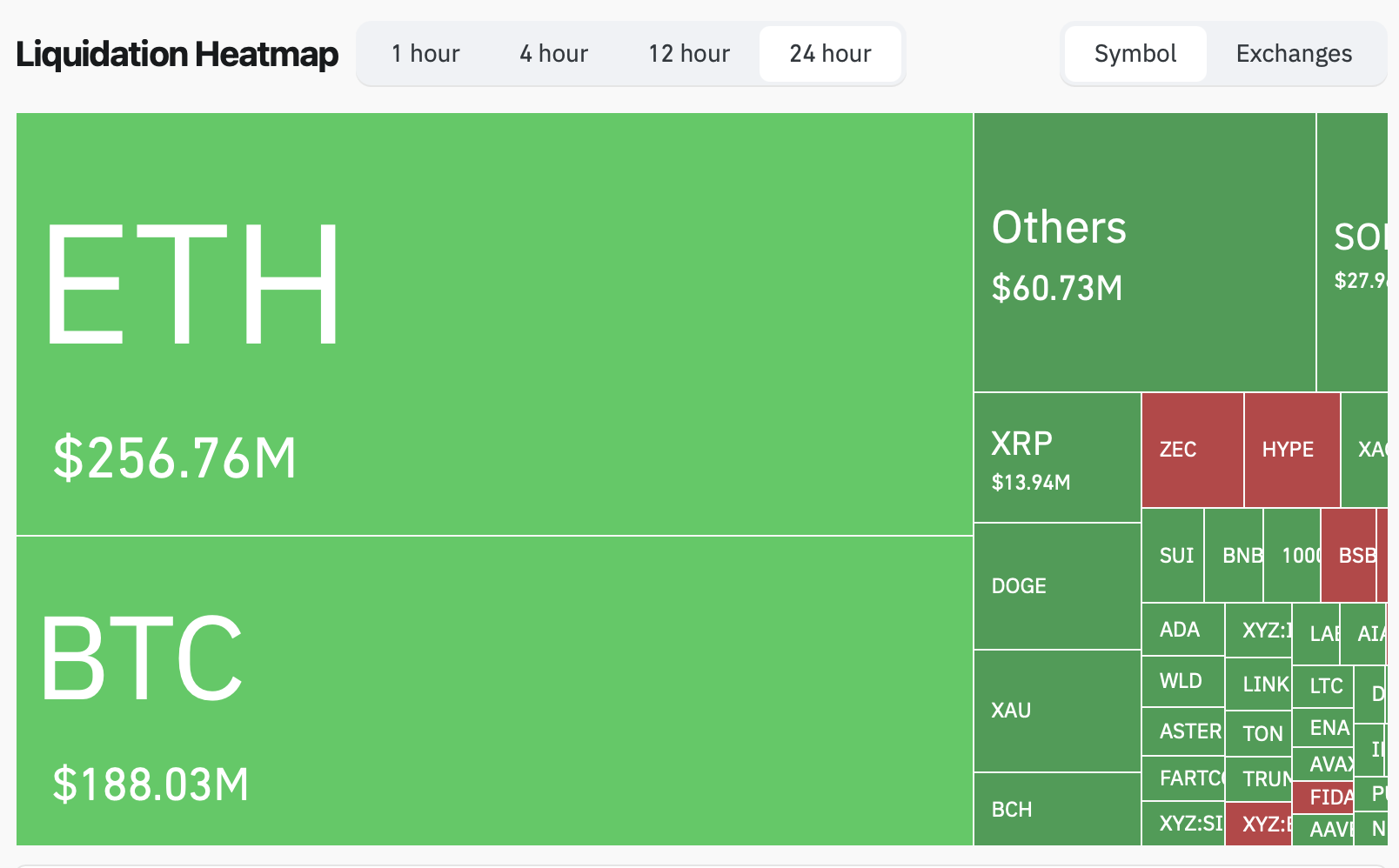
The recent market correction heavily impacted overleveraged long traders, who saw around $606.9 million erased. Rapid downside movement triggered cascading liquidations across derivatives markets, particularly on Binance, Bybit, Hyperliquid, and OKX.
Data from CoinGlass liquidation heatmap shows Binance recorded some of the largest losses, including more than $303 million in long liquidations during the peak of the selloff. Bybit and Hyperliquid also saw significant wipeouts as volatility intensified.
The scale of the liquidations suggests traders remained heavily bullish despite weakening market momentum in recent weeks. Once Bitcoin lost key short-term support levels, forced liquidations accelerated the downside pressure across the broader crypto market.
Ethereum experienced the heaviest losses among major assets. The network accounted for approximately $244 million in liquidated positions, significantly more than Bitcoin’s $160 million. ETH’s higher leverage concentration and stronger speculative positioning likely amplified the selloff. The correction also arrived amid broader macroeconomic uncertainty, including persistent inflation concerns and shifting interest rate expectations.
Bitcoin Retail Activity Falls to Historic Lows
While derivatives markets experienced heavy volatility, on-chain data revealed a deeper structural trend unfolding beneath the surface. According to CryptoQuant analyst Darkfost, retail Bitcoin inflows to Binance have now reached their lowest levels ever recorded. The monthly average of retail BTC inflows currently stands at only 314 BTC.
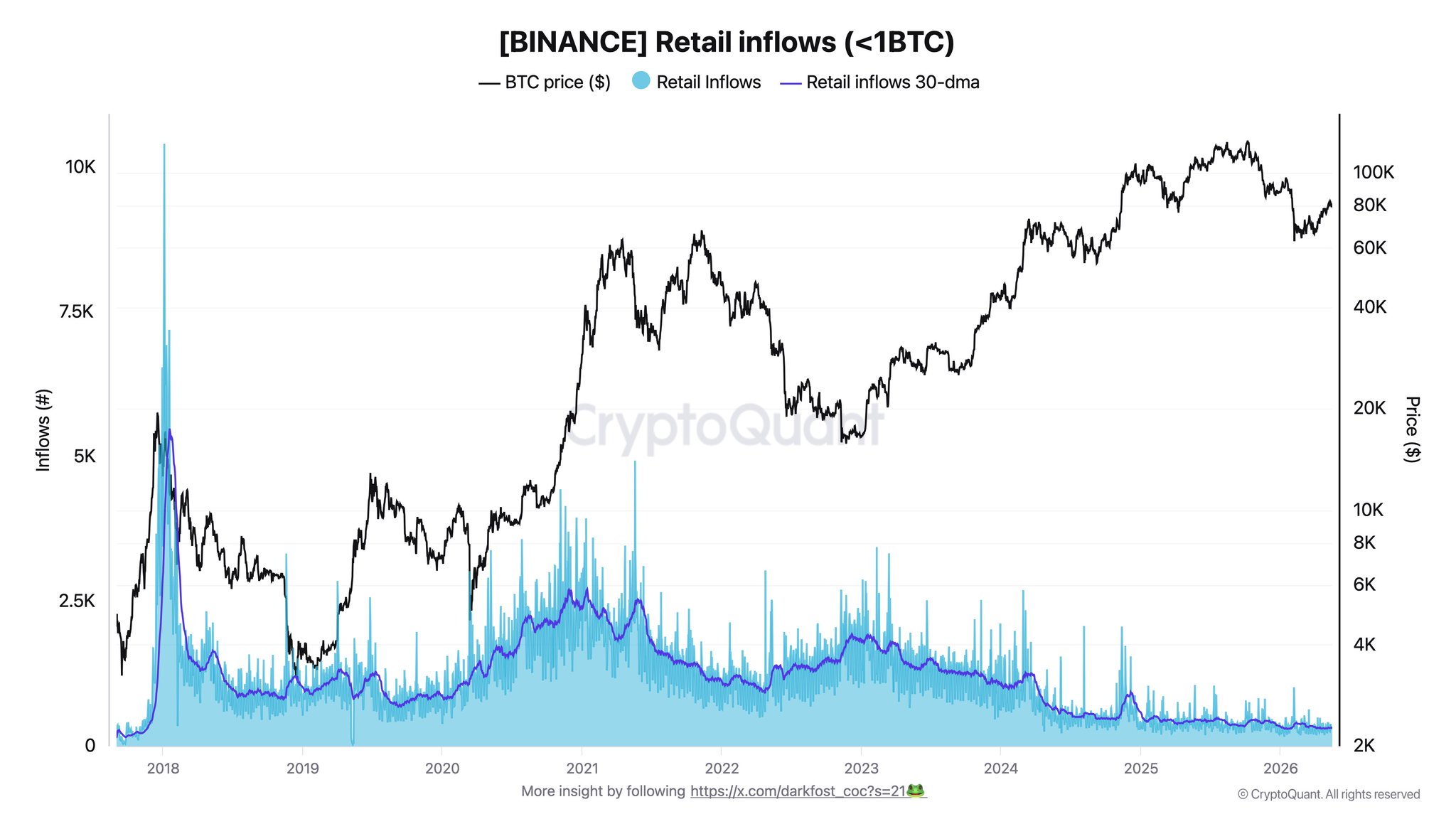
The decline becomes even more striking when compared to previous cycles. Retail inflows averaged around 1,800 BTC during this bear market phase and roughly 1,200 BTC during the March 2024 top. During earlier cycles, inflows peaked at around 5,400 BTC in 2018 and approximately 2,600 BTC in 2021. Even in January 2024, retail inflows still hovered near 1,000 BTC. Since then, the figure has fallen by more than three times.
The data shows retail participation in Bitcoin markets continues shrinking rapidly. Bitcoin holders with less than 1 BTC appear to be reducing direct BTC ownership or leaving exchange-based activity entirely.
Bitcoin Markets Continue Shifting Toward Institutions
The collapse in retail activity highlights how much the Bitcoin market has changed over the past several years.
Recent CoinRemark coverage revealed that BlackRock now controls more than $64.85 billion worth of Bitcoin through its ETF holdings, representing roughly 3.87% of the total BTC supply. Meanwhile, Wall Street firms continue expanding blockchain and crypto operations as institutional participation grows steadily.
Spot Bitcoin ETFs may also explain part of the retail decline. Many investors now gain exposure through Bitcoin-related traditional brokerage products rather than purchasing and holding BTC directly on exchanges.
The latest liquidation event may therefore reflect more than short-term volatility. It also highlights the ongoing transformation of crypto markets themselves. Institutional capital continues to expand while retail on-chain participation steadily fades, reshaping the structure and behavior of the Bitcoin market in the process.






 The CoinRemark Team
 Evans Kelvin