



A crypto trader identified as ‘Fibs’ has drawn attention after executing an unusual memecoin play this week. The trader acquired a large amount of the UNC token supply and distributed most of it. At the time of his initial purchase, the project was valued at just $6,000 market cap.
What began as a high-risk early entry has since evolved into a multi-million dollar position. The distributed tokens are now collectively worth approximately $6.4 million. The account highlights both the explosive nature of memecoin markets and the impact of strategic token distribution.
Whale Accumulates 37% of UNC Supply Early
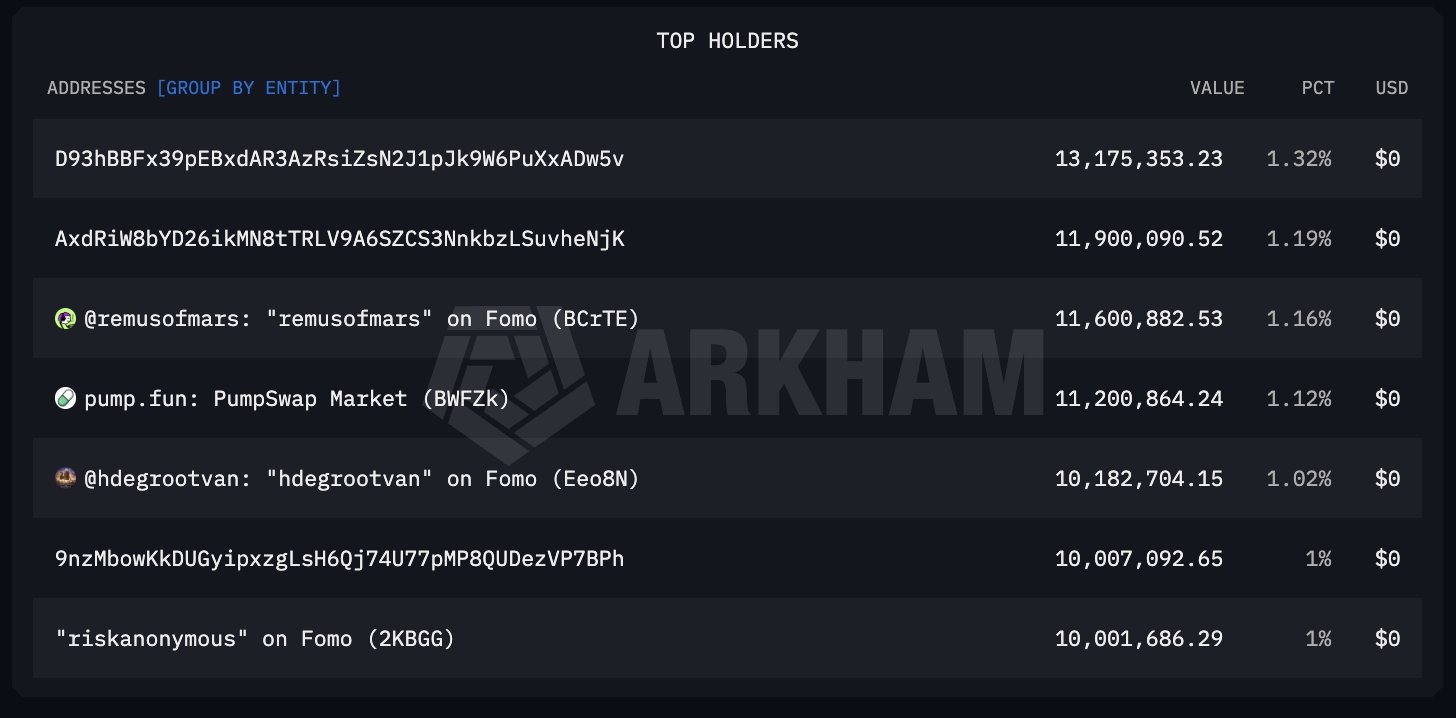
Arkham Intelligence data shows that Fib secured a significant share of the UNC supply in a single move during the token’s early phase. Acquiring over a third of the total supply at such a low valuation suggests a high-conviction bet, typical of early memecoin positioning where outsized returns are possible but far from guaranteed.
Rather than holding the entire position, however, the trader redistributed 33.85% of the UNC supply across more than 2,000 wallet addresses. The recipients included active on-chain traders and recognizable accounts such as Remusofmars, Traderpow, and DipWheeler.
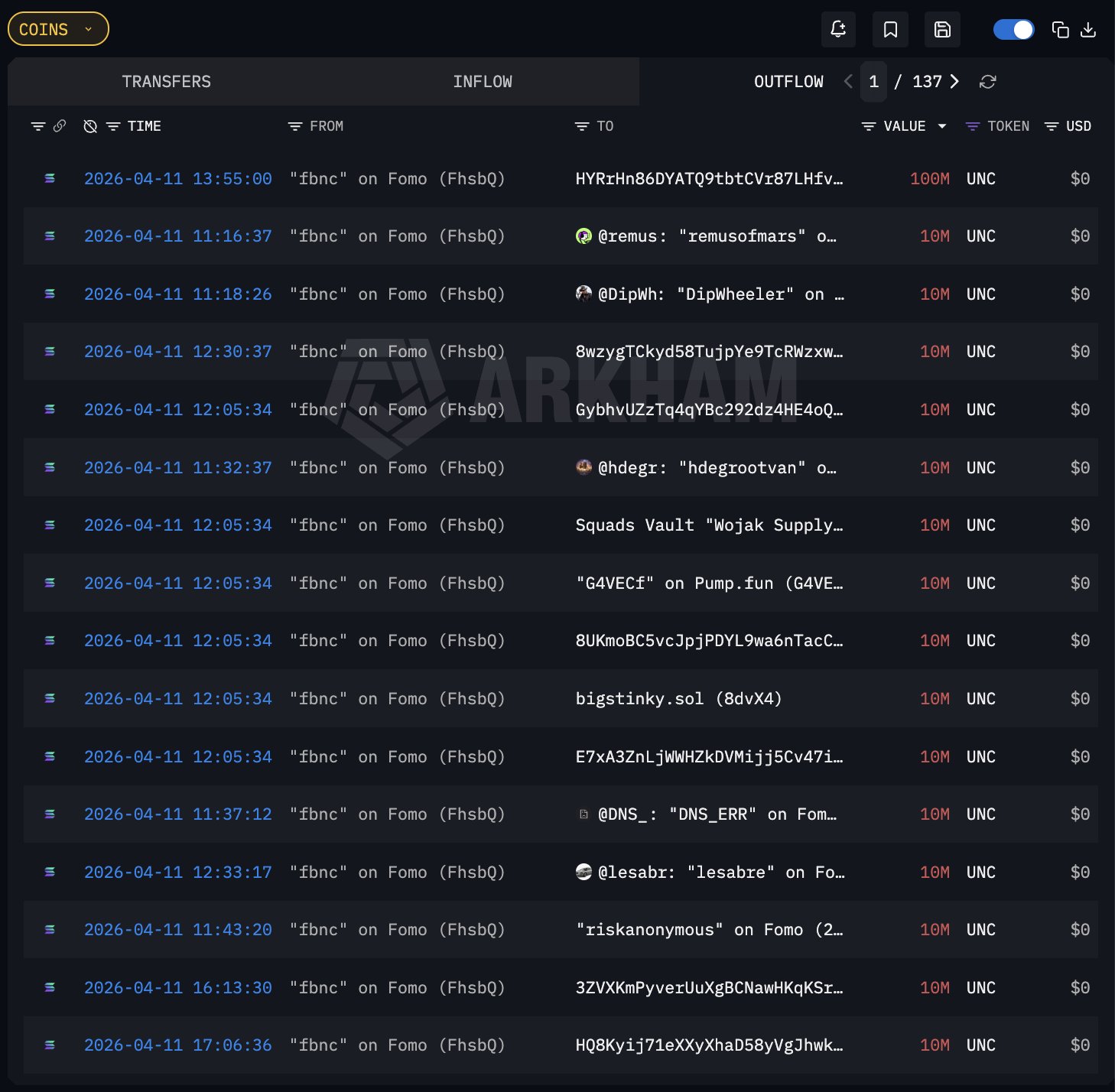
Airdropping the memecoin to wallets with existing activity and visibility may have been a strategic move to increase engagement, trading activity, and awareness around the token. Such targeted airdrops can serve as a powerful growth mechanism, effectively turning recipients into participants in the token’s expansion.
Airdrop Value Surges to $6.4 Million
Market data shows that UNC experienced a sharp upward move following the distribution. The token’s price climbed steadily from $0.00056 on April 13 to $0.022 today, April 16. Trading activity increased, and its market cap currently sits at $21 million.
As the UNC price climbed, the value of the distributed tokens rose significantly. The total airdrop is now worth around $6.4 million, representing a dramatic increase from the token’s initial valuation.
Some of the largest allocations stand out. Approximately 1% of the total supply was sent to a group of 22 wallets, with each now valued at close to $200,000.
Strategy Behind the Move
The sequence of events suggests a deliberate strategy rather than a random act of generosity. By acquiring a large share of the supply early and redistributing it to active traders, the whale effectively seeded the market with participants who could drive engagement.
This approach can amplify visibility and create organic demand. Recipients are more likely to interact with the meme token, trade it, or share it within their networks, further expanding its reach. In this sense, the airdrop functions as both a distribution mechanism and a marketing strategy.
The UNC event also highlights a broader trend in token marketing. Rather than relying solely on hype, some projects are leveraging on-chain data to identify and target influential wallets.
This shift reflects a more calculated approach to launching and scaling tokens. By combining early accumulation with targeted distribution, traders can create conditions that support rapid growth.







 The CoinRemark Team
 Evans Kelvin