




Bitcoin faced a sharp rejection just as it approached the $80,000 level this morning, reversing course in a sudden move that caught traders off guard. Within a few hours, the BTC price dropped by approximately 2.8% despite the absence of any major news catalyst. At the time of trading, the asset was trading around $77,700.
The move appeared abrupt on the surface. However, CryptoQuant analyst Darkfost has revealed the underlying cause. Using on-chain data, he showed how increased activity in the derivatives market almost exclusively drove the decline.
$1.35 Billion in Selling Pressure Hit Within an Hour
The turning point came from a surge in aggressive sell orders. CryptoQuant data shows that roughly $1.2 billion in sell volume hit Binance alone within a single hour. Eventually, total selling pressure across all exchanges reached approximately $1.35 billion, all within the hour.
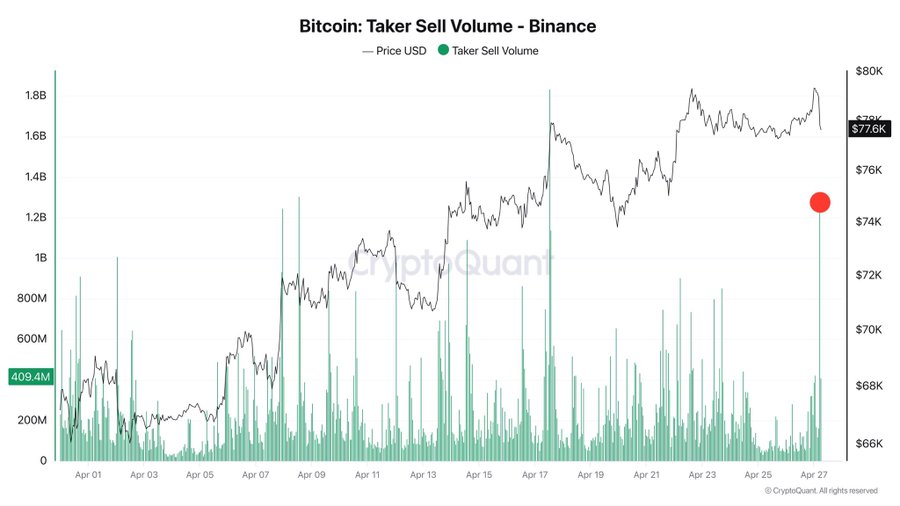
This type of volume spike is significant. Unlike passive selling, these were taker sells, meaning traders were actively hitting bids to exit positions quickly. The intensity of this flow overwhelmed the order books and forced Bitcoin to reverse just below the $80,000 resistance level.
The concentration of activity on Binance also reinforces its role as the dominant venue for crypto derivatives trading, where traders often initiate and unwind large positions. In leveraged markets, price movements can accelerate rapidly when positions begin to unwind. As Bitcoin approached resistance, traders likely started closing long positions or were forced out through liquidations.
This created a cascade effect. Initial selling triggered liquidations, which then added further selling pressure, pushing the price down even faster. The result was a sharp, fast correction from one of BTC’s best moves recently. Importantly, this type of decline differs from broader market sell-offs. It reflects positioning being cleared rather than a shift in long-term sentiment.
Bitcoin Funding Rates Reveal a Deeper Imbalance
While the immediate trigger was heavy sell volume, the broader context comes from derivatives positioning. Funding rate data show that Bitcoin has been trading in a deeply negative funding environment for several weeks. The 30-day cumulative funding rate has now reached around -7%, one of the most negative readings on record.
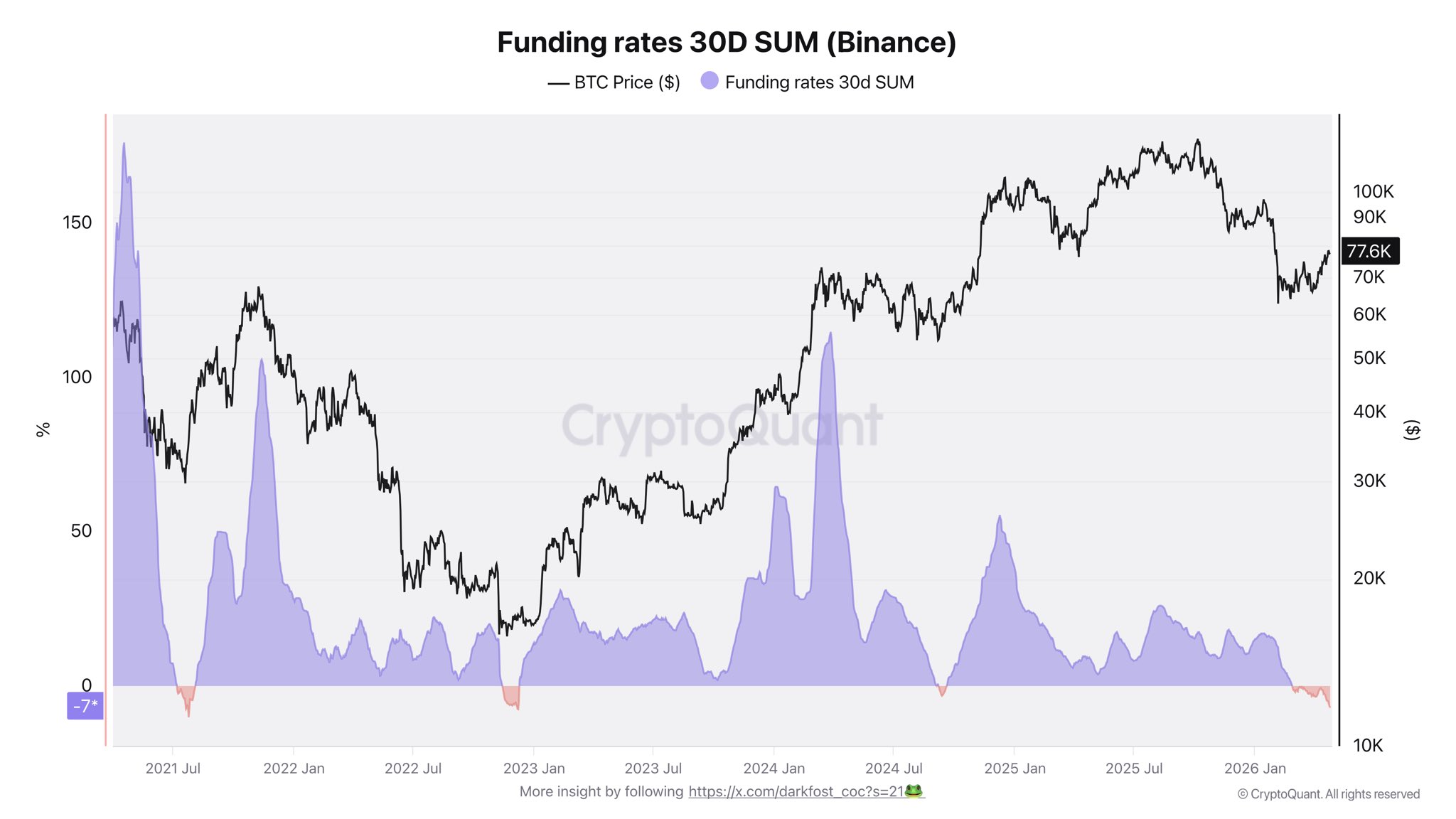
Negative funding indicates that short positions are dominant, with traders betting on further downside. When this positioning becomes extreme, it often leads to instability in the market. In the short term, it can amplify downward moves, as seen in this latest drop.
Historically, such extreme funding conditions do not persist for long. When too many traders are positioned in one direction, the market tends to move against them. In this case, a heavily short-biased market increases the likelihood of a short squeeze, in which rising prices force short sellers to buy back their positions. Positions entered late or with excessive leverage are particularly vulnerable to this dynamic.
Thus, while the current setup can produce short-term volatility and sharp corrections, it also builds the foundation for a potential rebound.







 The CoinRemark Team
 Evans Kelvin