
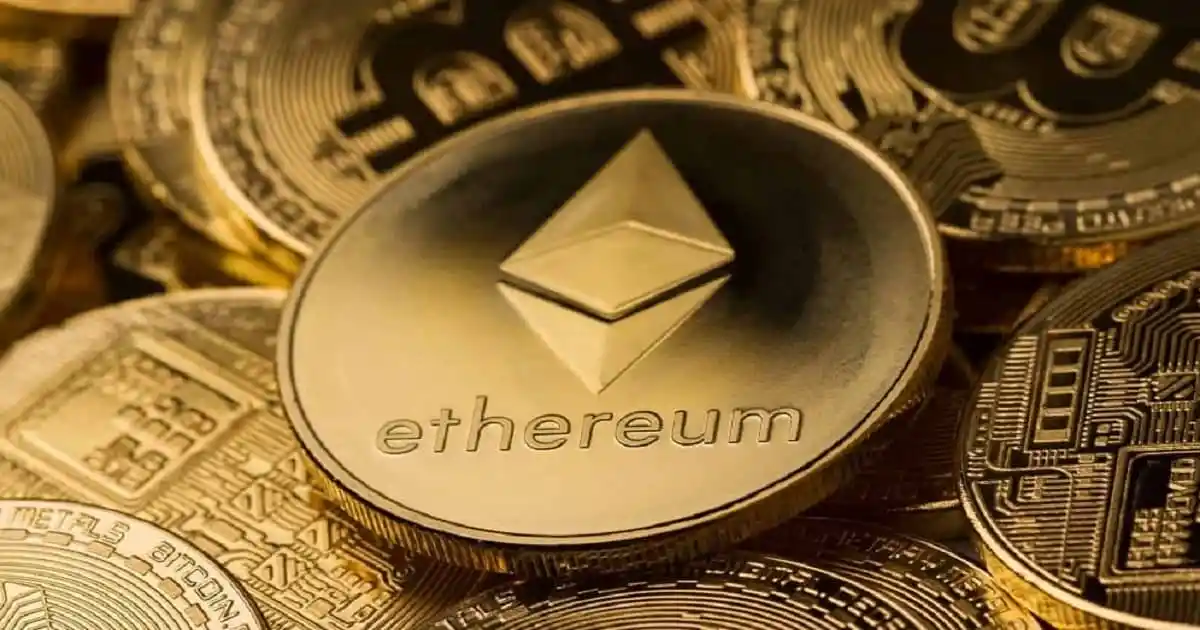
Ethereum is no longer the obvious bet it once was in today’s crypto discussions. For years, the network and its native token sat comfortably at the center of crypto. It powered DeFi, hosted NFTs, and became the default settlement layer for anything remotely on-chain. If you believed in crypto’s future in the early days, you didn’t really question Ethereum—you bought into it.
But the market has changed. Faster chains are gaining ground. Layer-2s are fragmenting liquidity. And new narratives are reshaping what value in crypto means. Additionally, the Ethereum price USD has seen much better days than its recent performance. Since reaching a new peak in August 2025, the Ethereum price USD has slumped below $2,000 and has only recently resurged above that key price level. Having struggled to reclaim the area above $2,500, the crypto community wonders if Ethereum is still a good investment. The answer is not so simple.
Ethereum Price USD Shines in Structural Demand
The investment case for Ethereum is no longer defined by hype cycles or its advantage as a first-mover in smart contracts. Rather, it is increasingly tied to Ethereum’s positioning as blockchain-based financial infrastructure scales.
On-chain data already reflects this shift. Ethereum continues to dominate key segments of on-chain activity. The network currently boasts roughly $50 billion in total value locked (TVL) across decentralized finance protocols. Additionally, an estimated $16 billion in tokenized assets run on Ethereum. That is its core advantage. Stablecoins, tokenized assets, and decentralized applications continue to rely heavily on the network, and the ETH token, by extension.
The scale of this opportunity is significant. Estimates from recent industry research place the global securities market at over $300 trillion, with only about $30 billion currently tokenized. With more than half of that value living on Ethereum, the network is poised to receive a substantial market share if even 25% of the total securities market were to move on-chain.
Network effects further reinforce Ethereum’s position. It maintains the largest developer ecosystem in crypto, along with deep liquidity across applications. These characteristics make it difficult for competing platforms to displace Ethereum entirely, even as they gain traction in specific niches. These factors have strengthened Ethereum’s long-term fundamentals.
Competition and Scalability Remain Key Constraints
Despite these advantages, Ethereum’s limitations remain evident. Transaction costs on the base layer continue to rise during periods of congestion, and while Layer-2 scaling solutions have reduced fees, they have also fragmented liquidity and user experience.
This has created an opening for competitors. Networks such as Solana can process significantly higher transaction throughput, exceeding 1,000 transactions per second, while offering lower fees and simpler user flows. Similarly, Avalanche and other ecosystems have positioned themselves as alternatives for specific use cases, including tokenization and institutional deployments.
Ethereum’s response has been to shift scaling off the base layer, but this introduces tradeoffs. The ecosystem now depends on a growing number of Layer 2 networks, bridges, and interoperability solutions, increasing complexity for both users and developers. While this approach preserves decentralization at the base layer, it also dilutes the simplicity that competing chains often emphasize.
At the same time, Ethereum remains sensitive to broader macroeconomic conditions. Interest rate policy, liquidity cycles, and risk appetite continue to influence price action across digital assets. Even with strong fundamentals, Ethereum price USD has experienced significant volatility, declining from previous highs near $4,900 to lower trading ranges during periods of tightening liquidity. Therefore, Ethereum’s long-term value proposition does not eliminate short-term risk.
A Shift From Growth Asset to Infrastructure Bet
As stated earlier, the investment thesis for Ethereum has evolved. It is no longer purely a high-growth asset driven by narrative cycles. Instead, it is increasingly becoming a platform-level investment tied to the expansion of on-chain finance.
Thus, Ethereum is transitioning to mostly deriving its value from sustained usage and adoption, much like most infrastructure assets. That transition may limit short-term upside relative to more speculative assets. Nevertheless, it aligns Ethereum with longer-term structural trends, including tokenization, institutional adoption, and the digitization of financial markets.
Whether it remains a good investment ultimately depends on whether Ethereum continues to capture on-chain activity on a massive scale. Especially as institutions work to move a significant share of global financial activity on-chain, Ethereum could be facing a big value boost ahead.




 The CoinRemark Team
 Evans Kelvin