




For years, Bitcoin investors have relied on the four-year market cycle to anticipate major tops, bottoms, and bull runs. In recent months, many analysts have been questioning whether the old rules still apply today as the market structure and driving forces have shifted significantly. This article analyzes whether the bear market is finally over, or if another wave of selling still lies ahead for the premier cryptocurrency.
Introduction to Bitcoin Market Cycles
Understanding how Bitcoin has historically moved through the four-year cycle will provide important context on why investors are debating whether the bear market is over. Notably, traders have used this framework to identify market structure and mechanics for over a decade.
What Forms the Bitcoin Market Cycle
A typical Bitcoin cycle usually begins after a major market bottom. Following a prolonged bear market, Bitcoin often spends several months recovering. During that period, sentiment weakens and many investors give up on the market. This phase is also commonly known as accumulation, as long-term holders gradually build positions while prices remain relatively subdued.
Historically, the next major event in the cycle is the Bitcoin halving, an event that occurs roughly every four years and cuts the number of new BTC entering circulation by 50%. Previous halvings took place in 2012, 2016, 2020, and most recently in April 2024. The theory behind the cycle is that the supply tightening with sustained demand would gradually increase the asset’s price over time. In the months following a halving, Bitcoin would often rally strongly, eventually reaching a new all-time high. This would ultimately culminate in a euphoric phase before a sharp correction marks the beginning of the next bear market.
While halvings sit at the center of the four-year cycle theory, other factors such as global liquidity, macroeconomics, and investor sentiment also influence how each cycle unfolds.
How Long Has It Historically Lasted
The term “four-year cycle” comes from the fact that Bitcoin’s major market phases have historically aligned closely with its halving schedule. While no cycle is identical, previous market bottoms and tops have followed a remarkably similar four-year rhythm.
Following the collapse of the 2013 bull market, Bitcoin eventually bottomed in January 2015 before spending nearly two years recovering. The market later entered a powerful bull run that culminated in Bitcoin reaching a then-record high near $20,000 in December 2017.
A similar pattern emerged during the next cycle. After Bitcoin bottomed near $3,200 in December 2018, the market gradually recovered before surging to nearly $69,000 in November 2021, setting an all-time high at the time.
Bitcoin eventually reached its cycle low near $15,500 in November 2022 following FTX’s collapse. Since then, Bitcoin has climbed higher, leading many investors to believe the market has entered a new cycle in late 2022.
When the Current Market Cycle Started
Most analysts consider November 2022 to be the start of the current Bitcoin cycle. The collapse of FTX, Terra, and several other crypto firms triggered one of the industry’s deepest bear markets. At the time, Bitcoin fell roughly 77% from its all-time high. Sentiment was overwhelmingly bearish.
Meanwhile, as in previous cycles, Bitcoin began recovering from its lows throughout 2023. Improving macroeconomic conditions and growing investor confidence helped fuel the rebound. The market subsequently recorded a new top at $126,198 in October 2025.
Why Is This Bitcoin Cycle Controversial?
For years, Bitcoin’s four-year cycle was relatively predictable. Prices would typically bottom after a bear market, recover gradually, and reach new all-time highs following a halving event. That boom would extend for a period until the asset gets overbought and a new correction resets the market. However, this cycle has been different.
The launch of spot Bitcoin ETFs in January 2024 introduced a powerful new source of demand from institutional investors. As billions of dollars flowed into these products, Bitcoin surged to a new all-time high before the April 2024 halving — something that had never happened before.
That development has forced analysts to rethink the traditional four-year cycle. Some believe ETFs simply accelerated the cycle, while others argue institutional adoption has fundamentally changed Bitcoin’s market structure. The answer is important, as it would help determine if the ongoing price weakness is just another correction or part of a larger bear market.
Is the Bear Market Cycle Over?
The answer depends largely on whether investors believe Bitcoin is still following its traditional four-year cycle. Bulls argue that the bear market ended in November 2022 and that the current weakness is simply a correction within a larger uptrend fueled by ETF demand and institutional adoption. Bears, however, point to historical market behavior and argue that the cycle may not be finished yet.
What Context From Prior Cycles Suggests
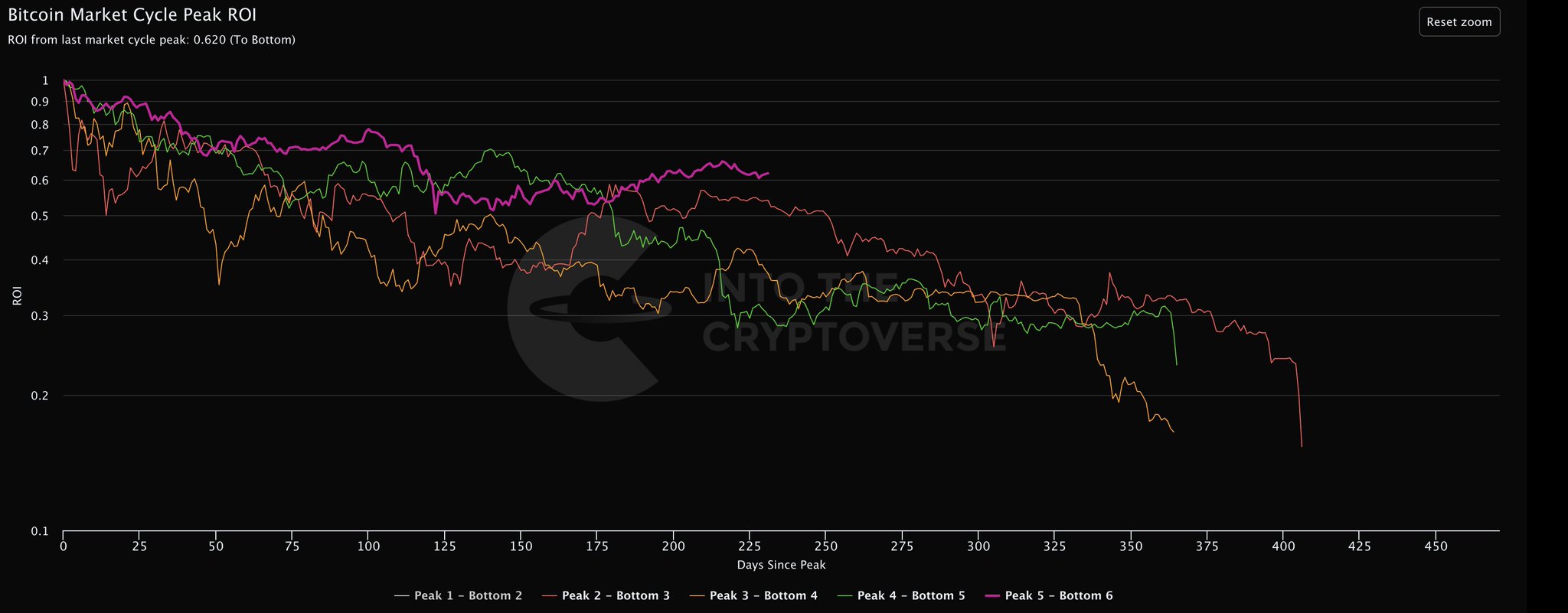
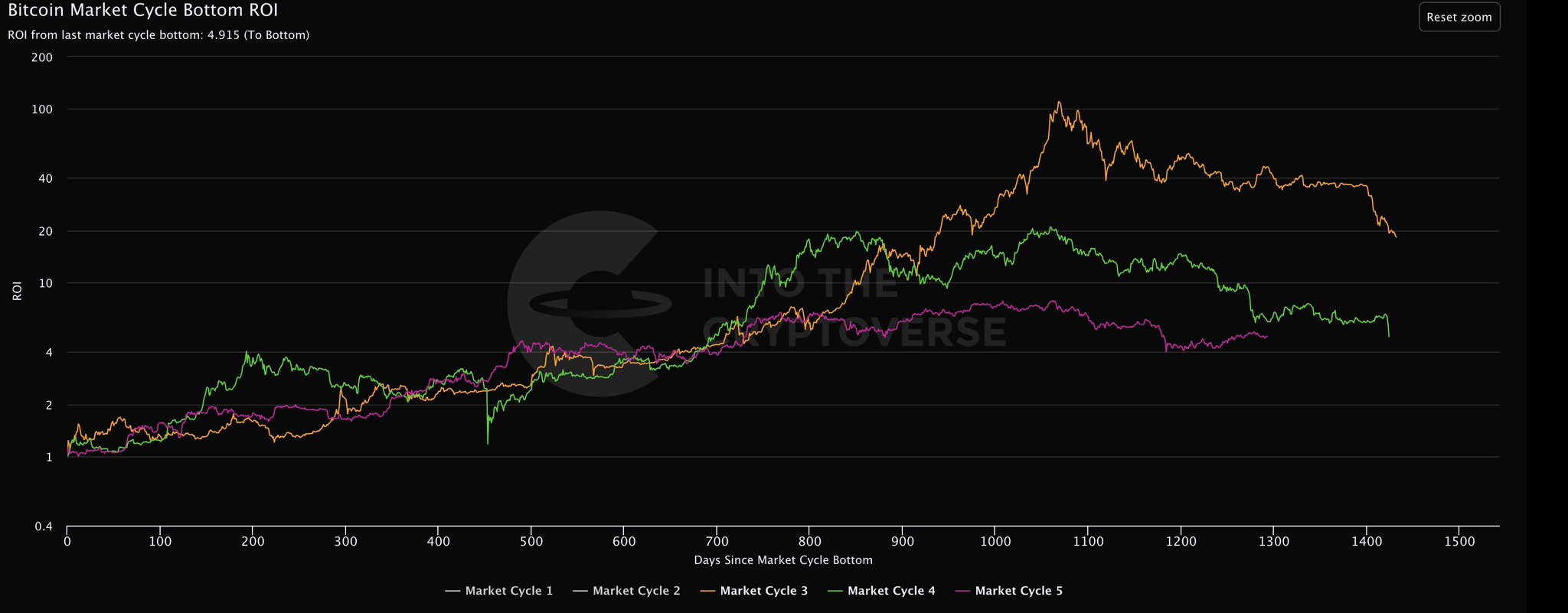
Looking at previous Bitcoin cycles, large corrections and lengthy consolidations were common even after strong recoveries. Historical data shows that Bitcoin’s current performance from both its cycle bottom and cycle peak remains broadly similar to prior market cycles, even if the drawdowns have been less severe. This suggests that the ongoing price weakness is not unusual.
Is the Recent Rally to $82,000 Another Bear Trap?
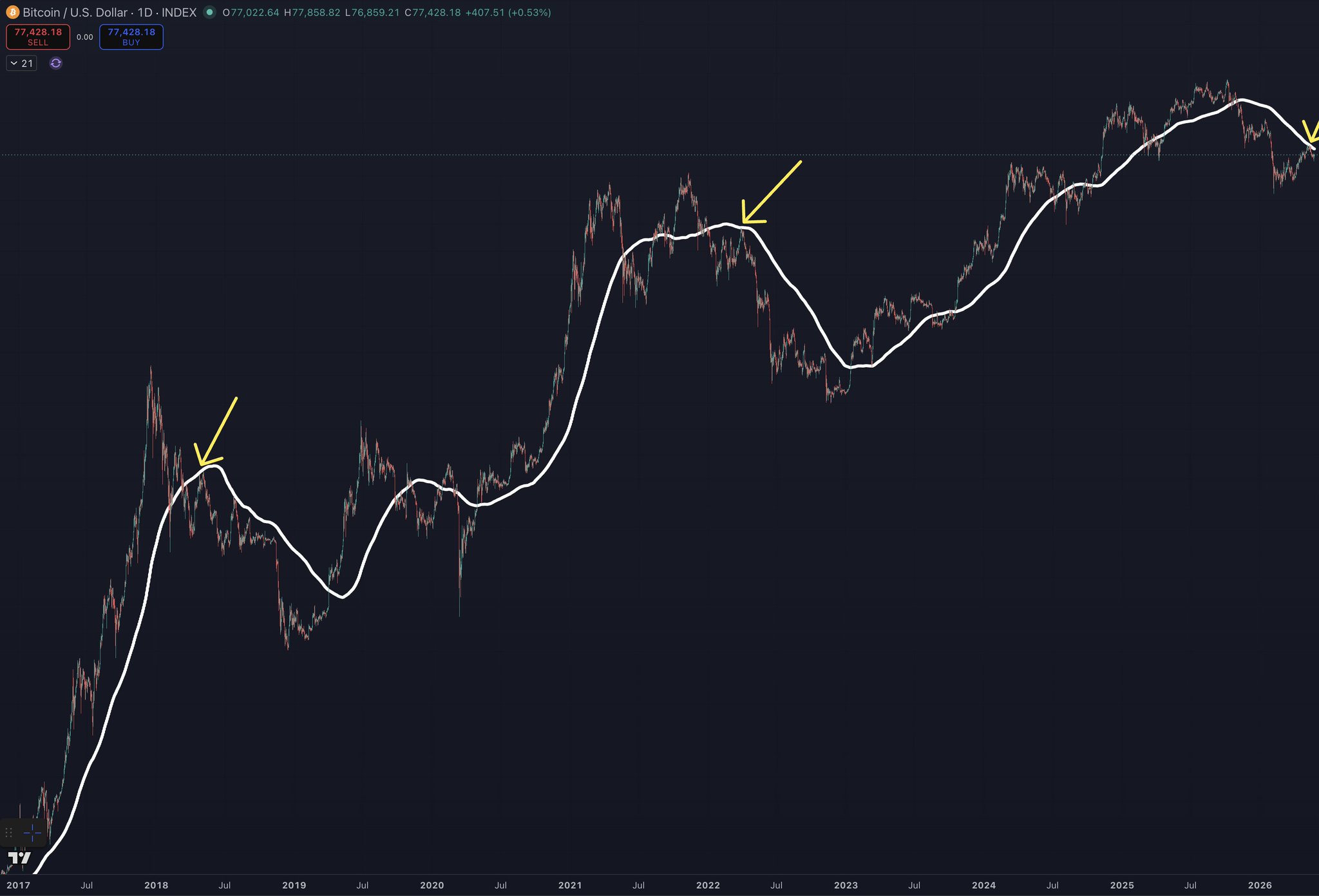
Analyst Benjamin Cowen believes it could be. In a recent X post, he noted that previous Bitcoin bear markets featured powerful counter-trend rallies that lasted more than 20 weeks before the market eventually formed a new low. Meanwhile, the recent rally to around $82,000 lasted only 16 weeks before stalling.
Cowen also points out that Bitcoin has historically faced resistance around its 200-day moving average during bear markets, a pattern that resurfaced during the latest rally. While this does not guarantee another decline, it suggests the possibility that the move was a bear trap rather than the start of a sustained uptrend.
How Low Can We Go?
If the bear market thesis proves correct, some analysts believe Bitcoin could still revisit the $50,000 region before forming a durable bottom. Such a move would be painful for investors, but it would remain within the range of historical corrections seen during previous market cycles.
When to Expect Another Bull Cycle
If Bitcoin follows its traditional cycle structure, the next major bull phase could begin once the current correction fully plays out. Cryptoquant analyst Dan Crypto recently posited that the market could experience one more price shock before forming a durable bottom. Following that event, Bitcoin would be properly poised for the next stint in its cycle.
However, if ETFs and institutional demand have permanently altered Bitcoin’s market dynamics, the current consolidation may already be laying the foundation for the next leg higher. Either way, most analysts agree that Bitcoin’s long-term trajectory remains closely tied to liquidity, adoption, and investor demand.
What Happens to Altcoins During a Bitcoin Bull Run?
Historically, Bitcoin has led most major crypto bull markets. After Bitcoin has established a strong uptrend and investor confidence has returned, liquidity would begin to rotate into larger altcoins such as Ethereum, Solana, and XRP. Later in the cycle, smaller-cap altcoins and memecoins also record demand as traders take on additional risk. Sometimes, the small-cap tokens record even larger percentage gains than the larger assets.
How to Navigate the Bitcoin Bear Market
Investors must possess patience and proper risk management to successfully navigate the current Bitcoin bear market. Countertrend rallies can create the illusion that the worst is over before another correction arrives.
Hence, rather than trying to perfectly time the bottom, it may be wiser to practice dollar-cost averaging. That involves gradually building positions over time while prices remain depressed, instead of making one large purchase.
Investors should also monitor ETF flows, institutional demand, and macroeconomic conditions, as these have become increasingly important drivers of Bitcoin’s price action.
Most importantly, investors should remember that volatility is normal. Previous Bitcoin cycles have featured multiple rallies and corrections before a clear long-term trend emerged.
FAQ
What Happened to Bitcoin Today?
Bitcoin slipped back below $73,000 today following choppy price movement last week. The renewed price weakness came as Spot Bitcoin ETFs extended a three-week outflows streak, suggesting softening institutional demand. Additionally, renewed geopolitical tensions between the U.S. and Iran triggered a broader risk-off sentiment across markets during the past week.
Bitcoin Bear Market Prediction
After revising its 2026 prediction twice, Standard Chartered believes Bitcoin could still revisit $50,000 as market sentiment continues to weaken. Several other analysts support that thesis, predicting another major price shock before Bitcoin finally begins a sustained recovery.
Will Bitcoin Continue to Fall?
That remains uncertain. Bitcoin could face additional downside if institutional demand weakens further or macroeconomic conditions deteriorate. However, many investors remain optimistic about Bitcoin’s long-term trajectory.
Final Thoughts
The real conundrum is whether ETFs and institutional adoption have changed how Bitcoin’s four-year cycles materialize and behave. Historical data suggests caution, as previous bear markets featured powerful rallies before new lows were established. Yet Bitcoin has never experienced a cycle with this level of institutional participation. The coming months will reveal whether the traditional cycle is still in effect or it is evolving.






 The CoinRemark Team
 Evans Kelvin