
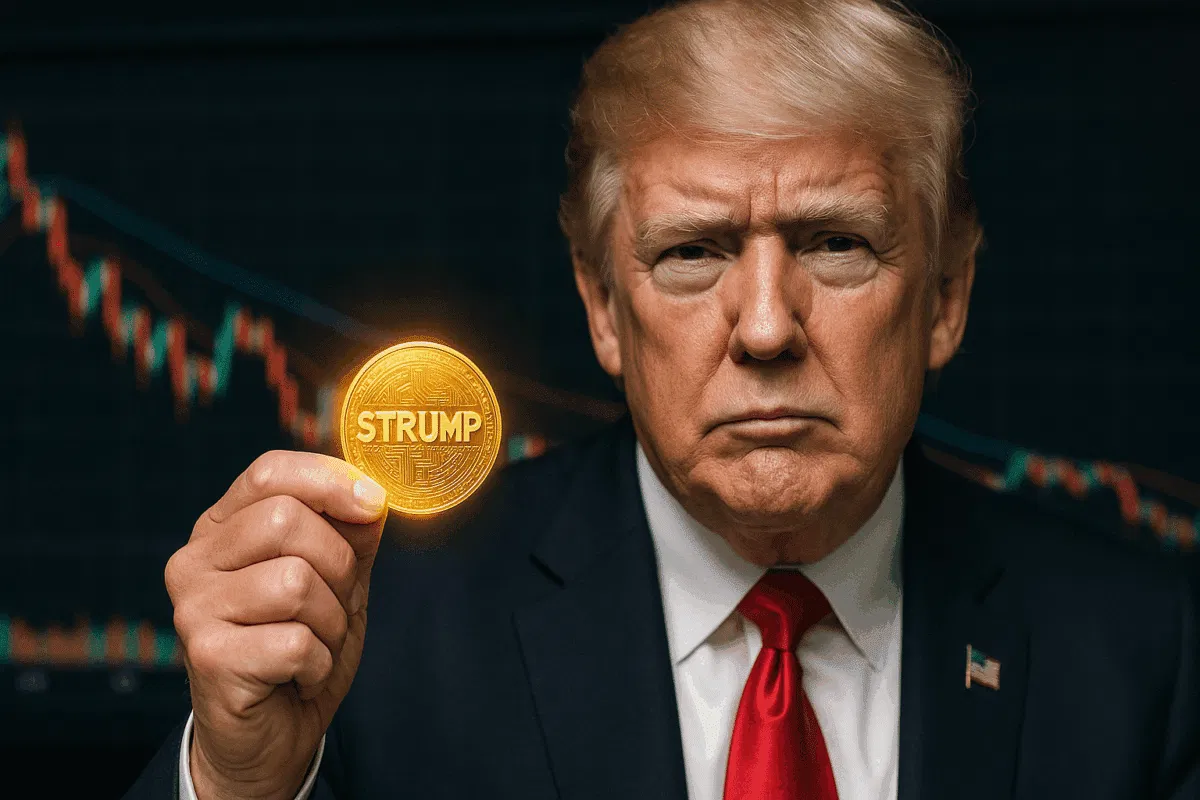
Almost one million wallets that purchased the TRUMP memecoin have collectively lost an estimated $3.8 billion, according to blockchain analytics from Nansen. Prominent new outlet, the New York Times, shared this, highlighting how insiders benefited, while the broader retail market suffered considerable losses.
The findings come shortly after President Donald Trump’s latest financial disclosure revealed about $1.4 billion in crypto-related income. While many buyers watched the token’s value collapse, the TRUMP memecoin continued generating revenue through transaction-related fees, allowing entities connected to the token to earn regardless of whether its price moved higher or lower.
Nansen’s analysis found that roughly two-thirds of wallets holding the TRUMP token ended June at a loss, reflecting the steep decline in the token’s market value since its explosive debut.
Two-Thirds of TRUMP Investors Lost $3.81B
The TRUMP memecoin launched just days before President Trump’s inauguration and quickly became one of the most talked-about digital assets in the market. The token surged from below $1 to more than $75 within days before reversing sharply.
According to Nansen, approximately 988,900 wallets finished the period with unrealized or realized losses totaling about $3.81 billion. Meanwhile, fewer than 500,000 wallets generated combined profits of roughly $4 billion.
The report noted that these gains were heavily concentrated among a relatively small group of early participants, while later buyers absorbed most of the losses after entering the market at significantly higher prices.
The token has since fallen about 97% from its all-time high of $75.35 to the current price of $1.77, leaving many holders with portfolios worth only a fraction of their original value.
Trump Continued Earning Despite the Token’s Collapse
President Trump’s financial disclosure showed substantial income tied to his expanding crypto ventures. He made $635 million from the TRUMP memecoin and more than $500 million from the World Liberty Financial venture.
Because the memecoin project collected fees from market activity, revenue continued flowing to affiliated entities regardless of whether the token appreciated or declined. Analysts say this business model differs from that of ordinary holders, whose returns depend entirely on market performance.
Meanwhile, the White House defended Trump’s broader digital asset initiatives, describing them as part of efforts to position the United States as a global leader in the crypto sector. Representatives connected to World Liberty Financial also pointed to broader market weakness as a major factor behind declining token prices.
Another Celebrity Memecoin Hurt Investors
The report has renewed debate over the risks surrounding celebrity-backed and politically branded memecoins.
Legal experts cited by The New York Times suggested disappointed buyers could eventually pursue civil lawsuits, despite disclaimers stating that the TRUMP token was intended as an expression of support rather than a financial product.
Although regulators have eased oversight of memecoins in recent months, legal scholars argue that promotional messaging and public expectations could still become important issues if future lawsuits emerge.




 Evans Kelvin