




The ongoing Bitcoin rebound above $68,000 may not mark the start of a sustained breakout. According to fresh analysis from CryptoQuant author and market analyst Pelin Ay, the move appears more consistent with a relief rally fueled by derivatives activity rather than a structural return of spot demand.
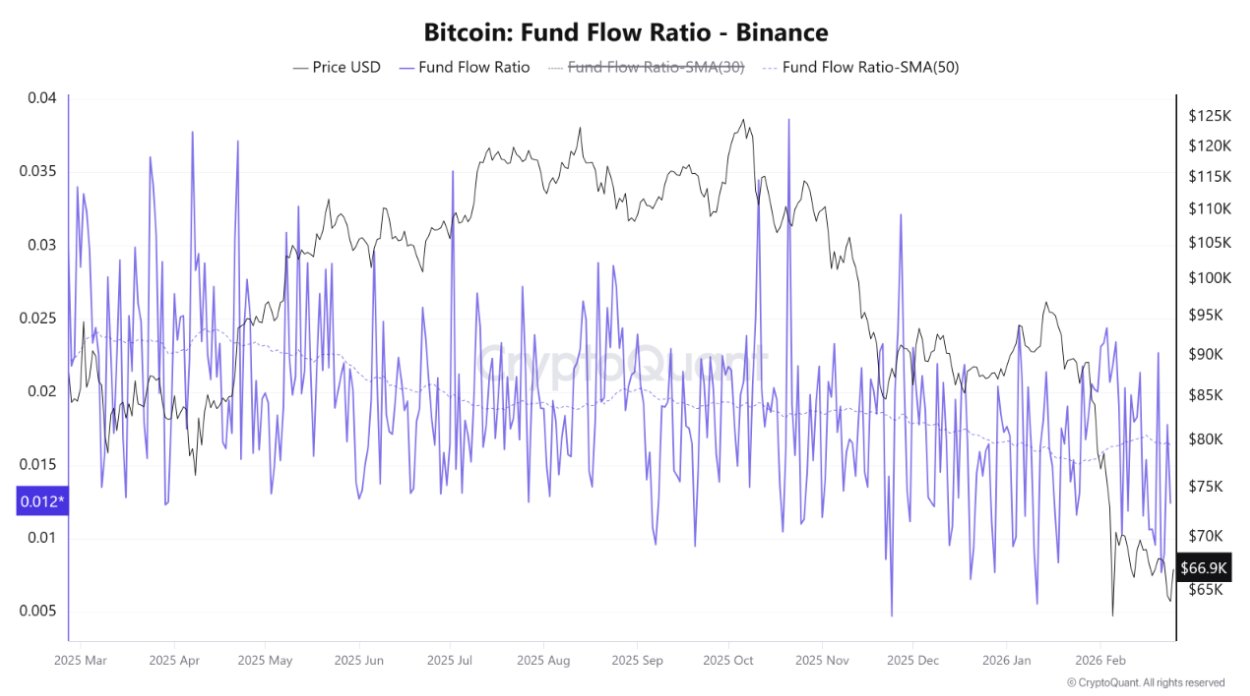
The analysis shows that the Binance Fund Flow Ratio currently sits at 0.012, reflecting a relatively low reading. The metric measures how much Bitcoin is flowing into Binance compared to the total BTC held on the exchange. Since Binance hosts some of the deepest liquidity in the market and is frequently used for large institutional transfers, changes in this ratio often provide insight into real-time selling pressure.
Spot Bitcoin Selling Remains Subdued
During typical capitulation events, sharp price declines are accompanied by spikes in exchange inflows as holders move coins to sell. That pattern has not emerged in the latest downturn. Despite Bitcoin falling below $63,000, the Fund Flow Ratio did not rise meaningfully. The absence of a surge in exchange inflows indicates that immediate sell-side pressure from spot markets remains contained.
With spot inflows muted, attention turns to derivative markets. Liquidation of leveraged positions can amplify price swings without requiring substantial spot selling. When overextended traders are forced out of positions, prices can fall rapidly even if token holders remain relatively resolute.
This dynamic helps explain why Bitcoin declined sharply without a corresponding increase in exchange inflows. The drop appears to have been driven largely by leverage unwinds rather than structural distribution.
She stressed that such setups can slow downside momentum once liquidation pressure eases. If bearish positioning builds while exchange inflows remain low, even modest upward move could trigger short covering, potentially accelerating a rebound.
“If the ratio remains low, any upward price reaction could create the conditions for a strong short squeeze. In other words, be prepared for a relief bounce,” Pelin noted.
Medium-Term Trend Still Weak
While a low Fund Flow Ratio reduces immediate selling pressure, it does not confirm a trend reversal, according to Pelin. She further stressed that the 30-day and 50-day simple moving averages of the metric continue to slope downward, indicating that medium-term demand conditions remain soft.
Structural recovery typically requires sustained improvements in spot inflows, rising liquidity, and stronger accumulation signals. Those factors have yet to materialize decisively.
The broader market backdrop reinforces this cautious stance. Bitcoin’s recent dip tested and lost key technical levels below $65,000 before stabilizing, ETF flows have fluctuated, and trading volumes remain subdued compared to prior expansion phases.
Taken together, the current setup suggests Bitcoin’s ongoing recovery may simply be a relief rally, a pause within a still-fragile trend. Without a meaningful shift in exchange flow trends or sustained demand growth, the move remains tactical rather than structural.







 The CoinRemark Team